From Concept to Launch in Days: How AI is Revolutionizing Product Validation in Fashion

Kirti Poonia

Stop me if this sounds familiar: You've just designed the perfect collection. Your team is buzzing with excitement. The sketches look incredible. Your gut tells you this is the one. But before you can get these products in front of customers, you need to navigate the expensive, time-consuming gauntlet of traditional product photography.
Sample manufacturing.
Model casting.
Studio bookings.
Photography crew coordination.
Post-production editing.
And that's before you even know if customers actually want what you're selling.
What if I told you there's a better way? What if you could validate your entire product concept, test different styles, and gather real customer feedback before spending a single dollar on manufacturing, inventory, or traditional photoshoots?
Welcome to the new era of fashion product development, where AI-powered tools like Caimera are transforming how brands go from concept to launch.
The Old Way: A Costly Game of Guesswork
Let's be honest about how fashion product development traditionally works. You'd sketch your designs, invest thousands in sample production, coordinate an expensive product photoshoot with models, photographers, stylists, and a full crew. Then you'd launch and... hope for the best.
Remember the last time you committed to manufacturing a full product line only to discover customers weren't as excited as you'd hoped? Or when your photography fashion model shoots got delayed by three weeks, pushing back your entire launch timeline? These scenarios aren't just frustrating, they're expensive.
Traditional product photoshoots for fashion brands can cost anywhere from $2,000 to $10,000+ per day. Factor in model fees , studio rental, styling, hair and makeup, and suddenly you're looking at a five-figure investment before you even know if your concept resonates with your target market.
But here's the thing: you don't need to produce physical samples or book an ecommerce photoshoot to see how your products will look on models anymore.
The Game-Changing Shift: Concept Validation Before Manufacturing
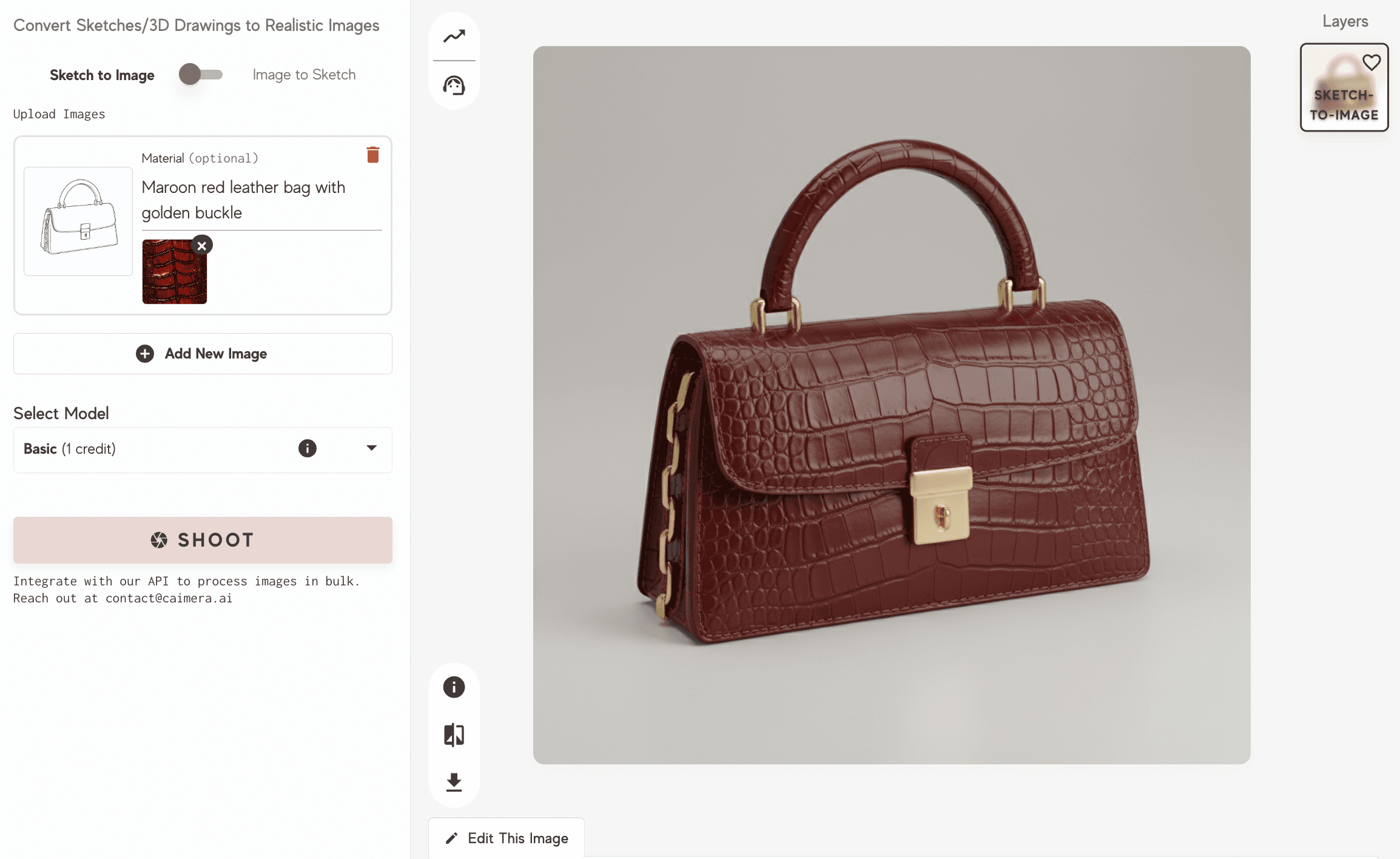
Think about this for a moment: what if you could show potential customers stunning, photorealistic images of your products being worn by diverse ai generated models before you've manufactured a single unit?
That's exactly what's happening right now in fashion and ecommerce. Smart brands are leveraging AI product photography and ai models for clothing brand to validate their concepts, test market demand, and refine their designs, all before committing to the expensive realities of traditional product development.
The shift is profound. Instead of the old-school linear path of Design → Manufacture → Photograph → Market → Hope, you're now looking at: Design → AI Generate → Test → Refine → Manufacture with Confidence.
Your New Concept-to-Launch Roadmap: The AI-Powered Approach
So how does this actually work? Let me walk you through the step-by-step process that's helping fashion brands, ecommerce retailers, and product designers revolutionize their go-to-market strategy.
Step 1: Sketch Your Vision
It all starts where it always has: with your creative vision. Whether you're working in Illustrator, sketching on an iPad, or going old-school with pencil and paper, you begin by bringing your product concept to life visually.
But here's where things get interesting. Your sketches don't need to be perfect. They don't need every seam line meticulously detailed. You just need enough to communicate your design intent, colors, silhouettes, key features, and the overall aesthetic you're going for.
Why is this different from before? Because you're not creating technical manufacturing specs at this stage. You're creating visual concepts that can be transformed into realistic product images through AI. The bar for "good enough to proceed" just got significantly lower, which means you can explore more ideas faster.
Step 2: Transform Sketches into Studio-Quality Images with AI Photo Studio
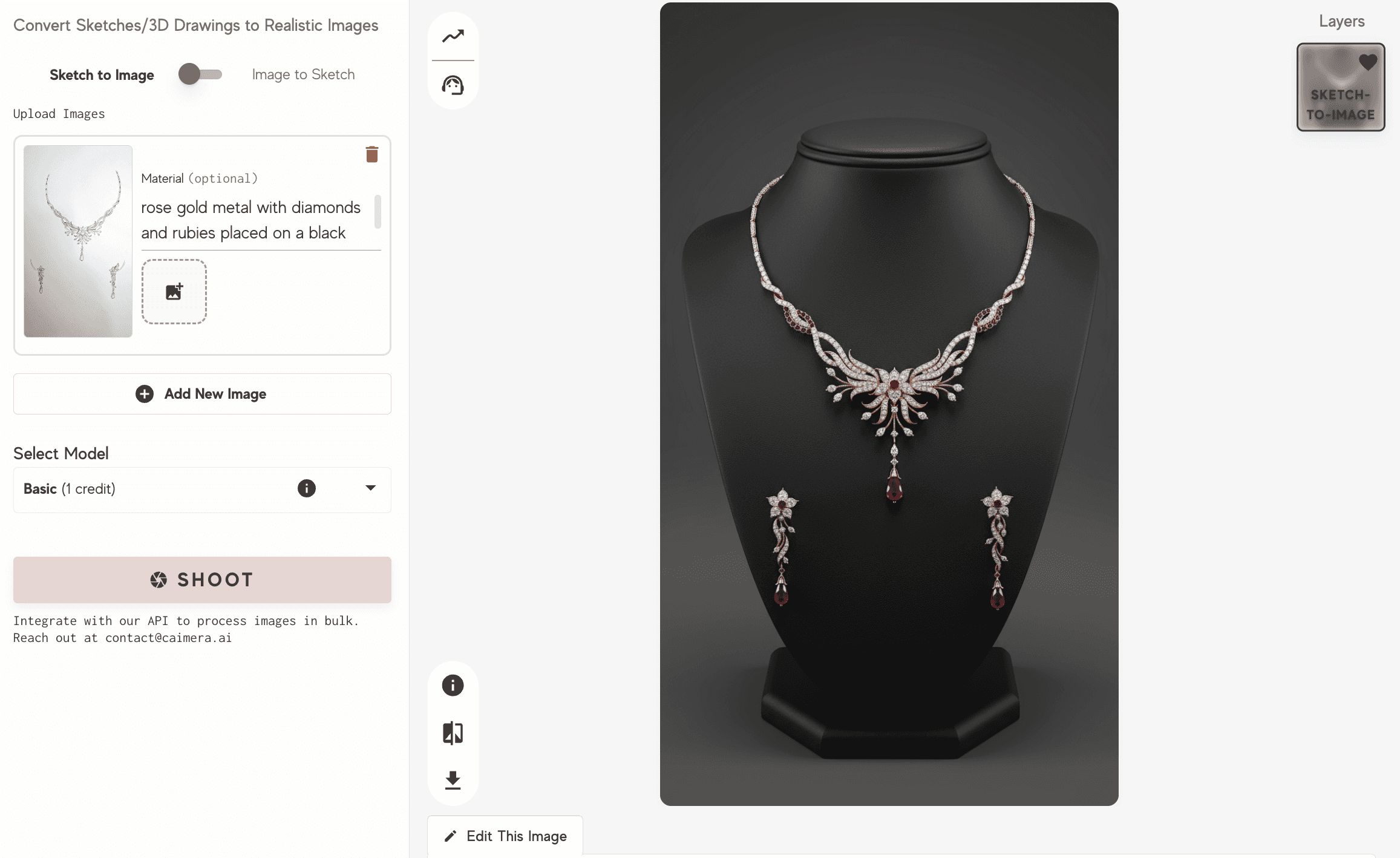
This is where the magic happens. Using an ai photo studio platform like Caimera, you can transform your basic product sketches into professional, photorealistic images that look like they came from a high-end fashion shoot.
Here's what makes this revolutionary: the ai product image generator doesn't just slap your design onto a generic template. Advanced fashion ai technology understands fabric drape, lighting, shadows, body proportions, and styling nuances. The result? Images that are virtually indistinguishable from traditional product photoshoots.
Want to see your new jacket on an ai female models in an urban setting? Done. Need to show your dress line on diverse ai models fashion with different body types and ethnicities? Handled. Curious how your menswear collection would look in a male model photoshoot scenario with multiple model photoshoot poses? It's all possible, without booking a single studio hour.
The ai fashion model generator creates ai generated model photos that capture the essence of professional modeling photography. Your ai model girl images showcase proper fit, movement, and styling, giving potential customers a realistic preview of your products.
Step 3: Create Multiple Variations (Without the Cost)
Remember when testing different product photography concepts meant coordinating multiple models photoshoot sessions? Each variation required new scheduling, additional costs, and precious time. Not anymore.
With ai model photoshoot technology, you can generate dozens, even hundreds, of variations in the time it would take to set up a single traditional fashion shoot. Different backgrounds? Check. Various lighting scenarios? Done. Multiple virtual model options to represent your diverse customer base? Absolutely.
Want to test whether your collection looks better in a minimalist studio setting or an outdoor lifestyle shoot? You can create both versions and let your audience tell you what resonates. Thinking about expanding from ai models female to include more diverse representation? You can visualize your entire range before making any commitments.
This is the power of ai designed fashion workflows. You're no longer constrained by the practical limitations and costs of traditional ecommerce photography. Your only limit is your imagination.
Step 4: Test and Validate Market Demand
Now comes the crucial part: validation. You've got gorgeous, professional-quality e commerce images of products that don't physically exist yet. So what do you do with them?
Smart brands are using these ai generated fashion models images to:
Create Landing Pages: Build product pages on your website or test site showing your concepts with these ai clothing model images. Add waitlist signup forms. Track which products generate the most interest.
Run Social Media Tests: Post your product images for ecommerce website concepts on Instagram, TikTok, or Facebook. Monitor engagement rates. See which designs get your audience excited. The product images for ecommerce website that you generate can go live immediately for market testing.
Launch Pre-Order Campaigns: Why guess about demand when you can measure it directly? List your concepts with pre-order options. The conversion rate from your ecommerce photographer-quality AI images tells you exactly what your customers want.
Conduct Targeted Ad Campaigns: Run small-budget Facebook or Instagram ad campaigns featuring your ai model fashion images. The click-through rates and engagement metrics give you hard data about product-market fit before you've spent a dime on manufacturing.
Gather Customer Feedback: Share your concepts with your email list or loyal customer community. Ask specific questions. What colors do they prefer? Which styles would they buy? What price points make sense?
This validation phase would traditionally happen after you've already committed to manufacturing, inventory, and expensive fashion model photography sessions. Now you're validating before any of those costs hit your balance sheet.
Step 5: Refine Based on Real Data
Here's where the iterative magic happens. Based on the feedback and engagement data from your validation testing, you can refine your concepts quickly and cost-effectively.
Did customers love the concept but want different colors? Update your design and regenerate your images with the new color palette. Discovered that a particular style resonated way more than expected? Double down on that aesthetic across your collection.
In the traditional model, these insights would come months into your launch, often after significant inventory commitments. Now you're making informed decisions with real customer data before manufacturing begins.
The speed of iteration is transformative. What used to take weeks or months, sending revised designs back to manufacturers, coordinating new product photoshoot dates, managing photography fashion model schedules, now happens in hours or days.
Step 6: Launch with Confidence (and Better Margins)
By the time you're ready to manufacture, you're not gambling on your product-market fit, you're executing on validated demand. You know which products your customers want, in what quantities, and at what price points.
But the benefits don't stop at validation. When it's time to launch, you've already got professional ecommerce photoshoot quality images ready to go. You can launch your marketing immediately while manufacturing is underway, building anticipation and even collecting pre-orders that help fund production.
Your customer acquisition costs are lower because you're promoting products you know resonate with your audience. Your conversion rates are higher because you've already optimized based on real feedback. And your inventory risk? Dramatically reduced because you're manufacturing based on demonstrated demand rather than hopeful projections.
The ROI Reality: Breaking Down the Economics
Let's talk numbers because the economic case for this approach is compelling.
Traditional Product Launch Path:
Sample production: $2,000-$5,000
Product photoshoot (model photoshoot, studio, crew): $5,000-$15,000
Potential reshoot if concepts don't work: $5,000-$15,000
Manufacturing first production run: $10,000-$50,000+
Unsold inventory risk: 20-40% of inventory investment
Time to market: 4-6 months
Total at-risk investment: $25,000-$85,000+
AI-Powered Concept Validation Path:
AI photo studio subscription: $99-$499/month
Product photography ai generation credits: $500-$2,000
Small-scale market testing budget: $500-$1,000
Manufacturing based on validated demand: $10,000-$50,000+ (but right-sized)
Unsold inventory risk: 5-15% (dramatically reduced)
Time to market: 2-4 weeks for validation + manufacturing time
Total at-risk investment: $1,000-$4,000 before manufacturing
The difference isn't just the dollar amount, it's the dramatically reduced risk profile. You're spending 95% less to validate your concepts before committing to manufacturing and traditional photography.
Real-World Applications: How Brands Are Winning
The Independent Designer's Dream
Sarah, an independent fashion designer, used to struggle with the chicken-and-egg problem: she needed professional images to attract customers, but couldn't afford expensive fashion shoot photography without revenue. Using ai generated model photos, she validated three dress designs, identified her bestseller through social media engagement, and launched a pre-order campaign that funded her first production run. Her total pre-launch investment? Under $1,000.
The Established Brand's Innovation Lab
A mid-sized apparel brand wanted to test a new line targeting Gen Z consumers without risking their core business. They used an ai fashion model generator to create an entire virtual collection with diverse ai models female and male representation. After testing through targeted social campaigns, they discovered two unexpected trends in customer preferences, pivoted their production strategy, and launched with confidence. Result? 3x higher conversion rates than their typical new product launches.
The Agency's Pitch Perfect
A marketing agency working with ecommerce clients now uses virtual model technology to pitch campaign concepts. Before their clients commit to expensive product photo shoot investments, they see exactly how the final ecommerce images will look. The client approval rate increased by 60%, and time-to-launch decreased by half.
Beyond Just Validation: The Extended Benefits
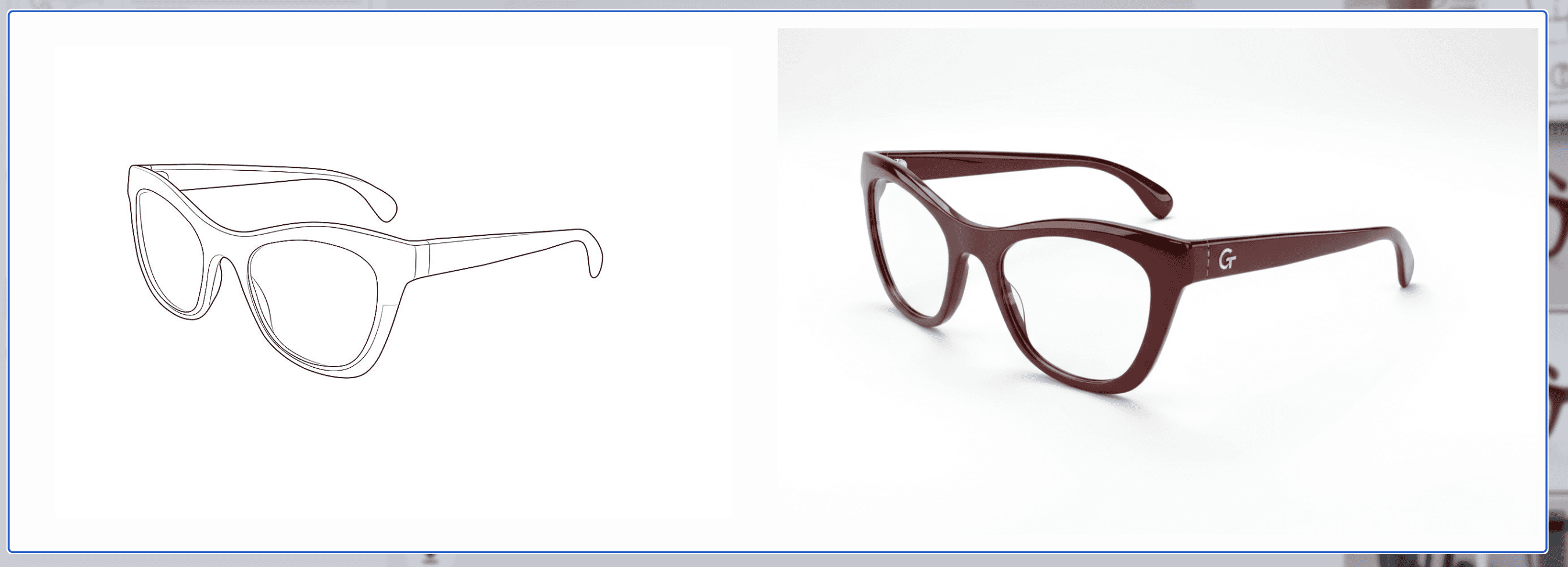
While concept validation is the headline benefit, the advantages of integrating AI into your product development workflow extend far beyond initial testing:
Sustainable Fashion Practices: Reducing sample waste and overproduction aligns with growing consumer demand for sustainable fashion. You're manufacturing based on actual demand rather than speculative forecasting.
Inclusive Representation: Traditional model photoshoot costs often limited brands to a narrow representation of body types and ethnicities. With ai generated models, you can showcase your products on diverse models that truly represent your customer base without exponentially increasing costs.
Rapid Response to Trends: Fashion moves fast. When you spot a trending aesthetic, you can visualize and validate concepts within days rather than months. This agility is increasingly crucial in today's fast-moving fashion landscape.
Global Market Testing: Want to test how your designs resonate in different markets? Create localized variations with appropriate ai clothing model styling and backgrounds for each target market. Test simultaneously across regions before committing to region-specific inventory.
Investor and Stakeholder Communication: Need to convince investors or retail partners about your vision? Professional ecommerce photographer-quality visuals are far more compelling than sketches or concept boards. Show them exactly what you're building before you build it.
Addressing the Elephant in the Room: Quality and Authenticity
I know what some of you might be thinking: "But can AI really match the quality of professional fashion photography?"
It's a fair question. A few years ago, the answer would have been "not quite." Today? The technology has reached a point where ai generated fashion models and ai fashion imagery are genuinely difficult to distinguish from traditional photography.
Modern ai product image generators understand lighting physics, fabric behavior, and compositional aesthetics. The product photography ai doesn't just paste your design onto a model, it understands how fabrics drape, how shadows fall, and how different materials interact with light.
That said, this isn't about replacing traditional photography entirely. Think of it as adding a powerful new tool to your arsenal. Use AI for concept validation, market testing, and rapid iteration. Reserve traditional photoshoots for your hero images, brand campaigns, and situations where that irreplaceable human touch matters most.
The smartest brands are using both: AI to validate and refine concepts quickly and cost-effectively, then investing in traditional photography for their validated winners. It's not either/or, it's strategic both/and.
Getting Started: Your Action Plan
Ready to transform how you bring products to market? Here's your concrete action plan:
Day 1: Audit Your Current Process (Optional but helpful later for comparing ROI)
Calculate your current time-to-market for new products
Document your typical product development costs
Identify your biggest bottlenecks and risk points
Determine your typical unsold inventory percentage
Day 2: Choose Your Concept
Select 2-3 product concepts for your AI validation pilot
Create sketches or design mockups of these concepts
Define your validation metrics (engagement rate, conversion rate, etc.)
Set your success criteria
Day 3: Generate and Test
Use an ai photo studio platform to create professional images
Build testing infrastructure (landing pages, social campaigns, or email tests)
Launch your validation campaigns
Monitor and track performance
Day 4: Analyze and Decide
Review your validation data
Calculate projected ROI based on demonstrated interest
Make your go/no-go decision for each concept
Refine based on feedback if proceeding
Beyond: Scale and Optimize
Integrate AI concept validation into your standard product development workflow
Use learnings to inform future design decisions
Build a database of what works (and what doesn't) for your audience
The Competitive Reality: Adapt or Get Left Behind
Here's the uncomfortable truth: while you're still doing product development the traditional way, your competitors are already using these tools. They're launching faster, testing smarter, and taking less risk.
The barrier to entry for testing new product concepts has collapsed. What used to require tens of thousands of dollars and months of time now requires hundreds of dollars and days of time. This democratization means more players can compete, more concepts can be tested, and the pace of innovation accelerates.
For established brands, this is both a threat and opportunity. The threat is that nimble competitors can out-iterate you. The opportunity is that you can move faster and take smarter risks than ever before.
For independent designers and small brands, this levels the playing field. You can now validate concepts with the same professional quality imagery that big brands use, without their budgets.
The question isn't whether AI will disrupt fashion product development, it's already happening. The question is whether you'll be early enough to capitalize on the advantages or late enough to struggle catching up.
Looking Forward: What's Next?
The technology is only getting better. We're moving toward a future where ai fashion model generator tools will offer even more capabilities:
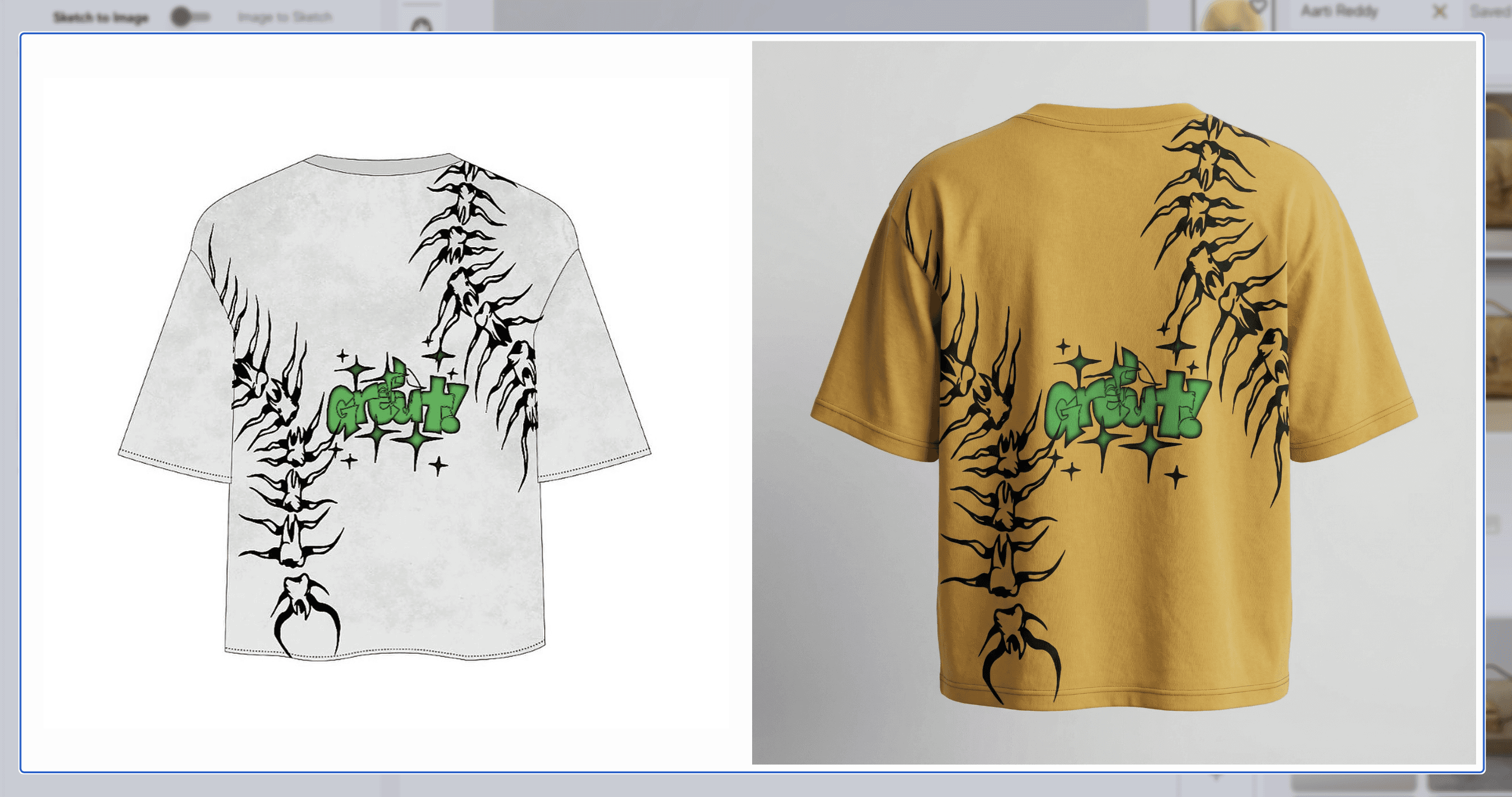
Real-time rendering that creates images instantly as you sketch
AI-powered demand forecasting that predicts trends before they peak
Integrated platforms that connect concept creation, validation, manufacturing, and fulfillment seamlessly
Even more sophisticated virtual model representations that capture nuanced styling details
The core principle will remain: validate before you invest. Test before you commit. Learn before you scale.
Your Next Move
The fashion industry rewards those who move fast and make smart bets. AI-powered concept validation gives you both advantages: the speed to test ideas quickly and the intelligence to make informed decisions.
You don't need to overhaul your entire operation tomorrow. Start with one product line. Run one validation test. Experience the difference between hoping your products will work and knowing they'll work.
Traditional product development asked you to be a fortune teller, to predict what customers would want months before they'd see it. This new approach lets you be a scientist instead, to test hypotheses, gather data, and make evidence-based decisions.
The tools are available. The process is proven. The only question left is: what will you create first?
What is AI product photography?
AI product photography uses artificial intelligence to generate photorealistic images of clothing and fashion products on virtual models, creating studio-quality visuals without physical photoshoots.
Can AI-generated images match traditional fashion photography quality?
Modern AI fashion photography produces images that are virtually indistinguishable from traditional shoots, with realistic lighting, fabric drape, and model poses suitable for ecommerce use.
How much does AI product photography cost compared to traditional shoots?
AI product photography typically costs $99-$499/month plus generation credits, compared to $5,000 - $15,000+ for traditional model photoshoots, representing 95-99% cost savings.
Do I need physical samples to create AI product images?
No, AI photo studios can generate realistic product images from sketches, designs, or flat-lay photos without manufacturing physical samples first.
Can I use AI-generated images on my ecommerce website?
Yes, AI-generated fashion model photos can be used commercially for ecommerce websites, marketplace listings, social media, and advertising campaigns.
How long does it take to generate AI product photos?
Most AI photo studio platforms generate professional-quality images in minutes to hours, compared to weeks required for coordinating traditional product photoshoots.
What types of models can AI generate for product photos?
AI fashion model generators create diverse virtual models including different genders, body types, ages, and ethnicities to represent your target customer base.
Is AI product photography suitable for validating new product concepts?
Yes, AI-generated product images are ideal for market testing and validation before manufacturing, helping reduce inventory risk and optimize product-market fit.
Can AI help reduce unsold inventory?
By validating product concepts with AI-generated images before manufacturing, brands can reduce unsold inventory risk from 20-40% down to 5-15% through data-driven production decisions.
How do AI-generated models compare to human models?
AI-generated models provide consistent, diverse representation at a fraction of the cost, though brands often use both AI for testing and human models for hero campaigns.
What file formats do AI photo studios support?
Most AI product photography platforms accept common formats including JPG, PNG, and can work with design files from Adobe Illustrator or similar tools.
Can I create lifestyle shots with AI product photography?
Yes, AI photo studios generate both studio product shots and lifestyle images with various backgrounds, settings, and styling scenarios for comprehensive ecommerce imagery.
How many product images can I generate with AI?
Most AI platforms offer credit-based systems or unlimited generation within subscription tiers, allowing hundreds of variations compared to limited traditional photoshoot options.
Is special photography expertise required to use AI photo tools?
No, AI product photography platforms are designed for designers, marketers, and brand owners without technical photography knowledge or experience needed.
Can AI product photography help with social media marketing?
Yes, AI-generated product images are ideal for social media testing, allowing quick creation of multiple versions to identify highest-performing content before major campaigns.
How accurate is fabric rendering in AI-generated images?
Modern AI understands fabric physics, creating realistic drape, texture, and movement in generated images suitable for product visualization and customer decision-making.
Can I test different colors and styles without new photoshoots?
Yes, AI platforms allow instant color and style variations from a single design, enabling comprehensive market testing without additional photoshoot costs.
What's the turnaround time for AI product photography?
AI generation is typically instant to a few hours, compared to 2-6 weeks for traditional photoshoot coordination, enabling rapid iteration and testing.
Are AI-generated product photos suitable for print advertising?
Yes, AI photo studios generate high-resolution images suitable for both digital channels and print advertising materials.
Can AI product photography replace all traditional photoshoots?
AI excels at product validation and standard ecommerce imagery, while traditional photography remains valuable for brand storytelling, hero campaigns, and unique creative concepts.
How does AI product photography support sustainable fashion?
By validating concepts before manufacturing, AI reduces sample waste, overproduction, and unsold inventory, aligning with sustainable fashion practices and consumer values.
Can small brands afford AI product photography?
Yes, AI product photography democratizes access to professional imagery with subscription costs under $500/month, making it accessible for independent designers and small brands.
What industries benefit from AI product photography besides fashion?
While fashion is a primary use case, AI product photography also serves accessories, jewelry, footwear, eyewear, and other consumer products requiring model photography.
How do I measure ROI from AI product validation?
Track metrics like pre-order conversion rates, social engagement, email click-throughs, and compare manufacturing costs based on validated demand versus speculative production.
Can AI create images for different market regions?
Yes, AI platforms can generate localized variations with appropriate model diversity and styling for testing across different geographic markets simultaneously.
Ready to revolutionize your product development process? Start validating your concepts today with AI-powered product photography and join the brands that are launching smarter, faster, and with greater confidence.