Is Social Media Dead?: Future of Marketing For Ecommerce Brands

Kirti Poonia

You post.
You wait.
Almost no one sees it.
No Leads. No Conversions.
That's the reality for most brands on social media right now. And the numbers tell the story clearly.
The average Instagram post in 2026 reaches just 3.5% of a brand's followers organically; down from 10 - 15% in 2020 as reported by Outfame.
Reels, which many brands pinned their hopes on, saw reach fall by 35% in 2025 alone. Overall post reach dropped 31%, from an average of 9,877 people to 6,754.
Facebook is worse. Its average organic reach has declined and now sits around 1.2% - 5.9% of followers in 2026. That means posting to your page is roughly as effective as putting a flyer on a lamp post in a town where almost no one walks past.
But here's the thing. The problem is not with any particular platform itself, but how most brands are using it.
This article breaks down what's actually driving ecommerce sales in 2026.
No fluff. Just the strategies that work, the data behind them, and what to do differently.
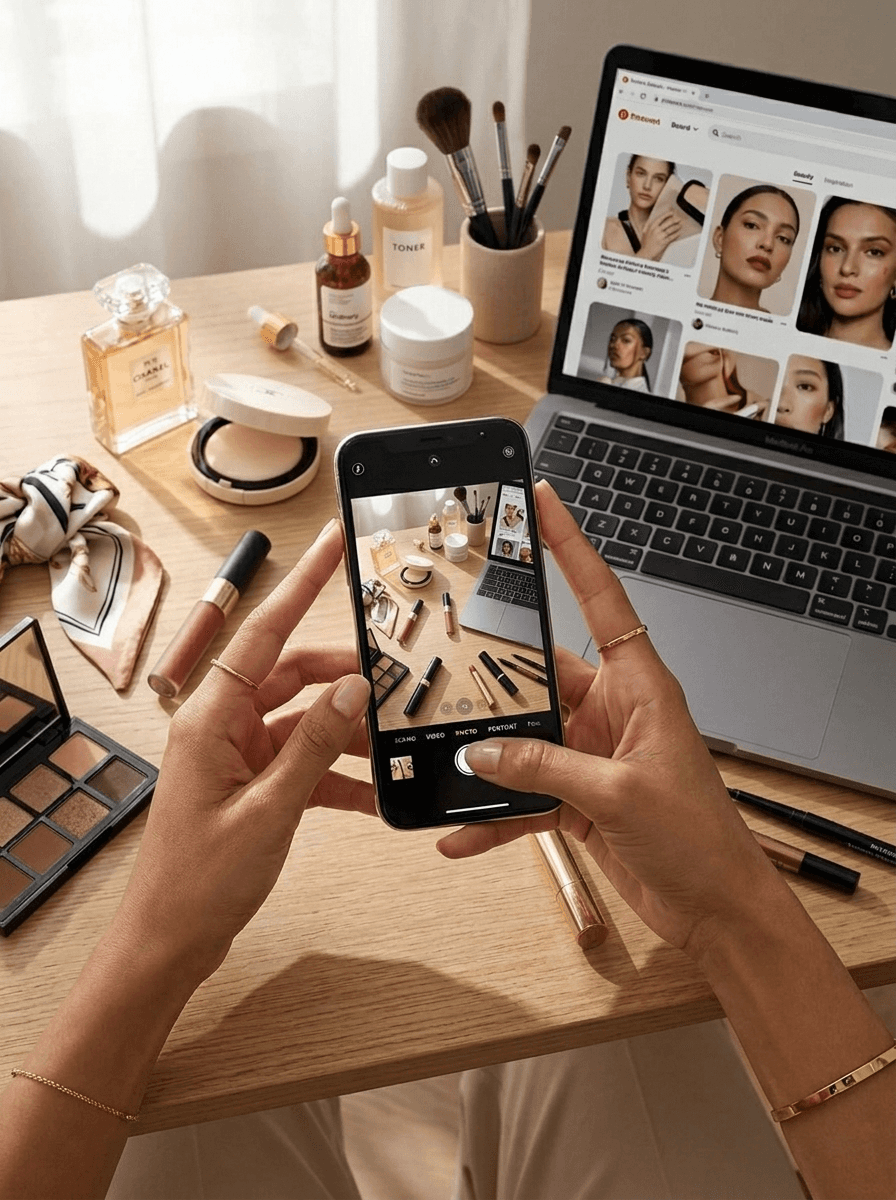
Consistently posting is no more a growth driver
Posting regularly on Instagram or Facebook or Tik-Tok and expecting new customers to find you? That ship has sailed. Platforms have deliberately dialled down free reach to push brands toward paid advertising.
Instagram's organic reach dropped 12% year-on-year in 2025. Facebook's average reach sits at just 1.2% - 5.9% of your followers (Addictive Digital, 2026). Global social media ad spend hit $219.8 billion in 2024 - nearly 30% of all digital advertising (Statista).
That's not a coincidence. Free reach went down as paid became the only reliable option.
Organic posting still has a role. Just not the one most brands think.
It's good for:
Social proof - people check your feed after discovering you elsewhere
Community - answering DMs, responding to comments, staying close to existing customers
Content testing - seeing what resonates before putting paid budget behind it
What it's not good for is finding new customers for free at scale.
The sooner you accept that, the more clearly you can see what actually works.
Social Commerce Is Booming - But It's Not the Same as Organic Posting
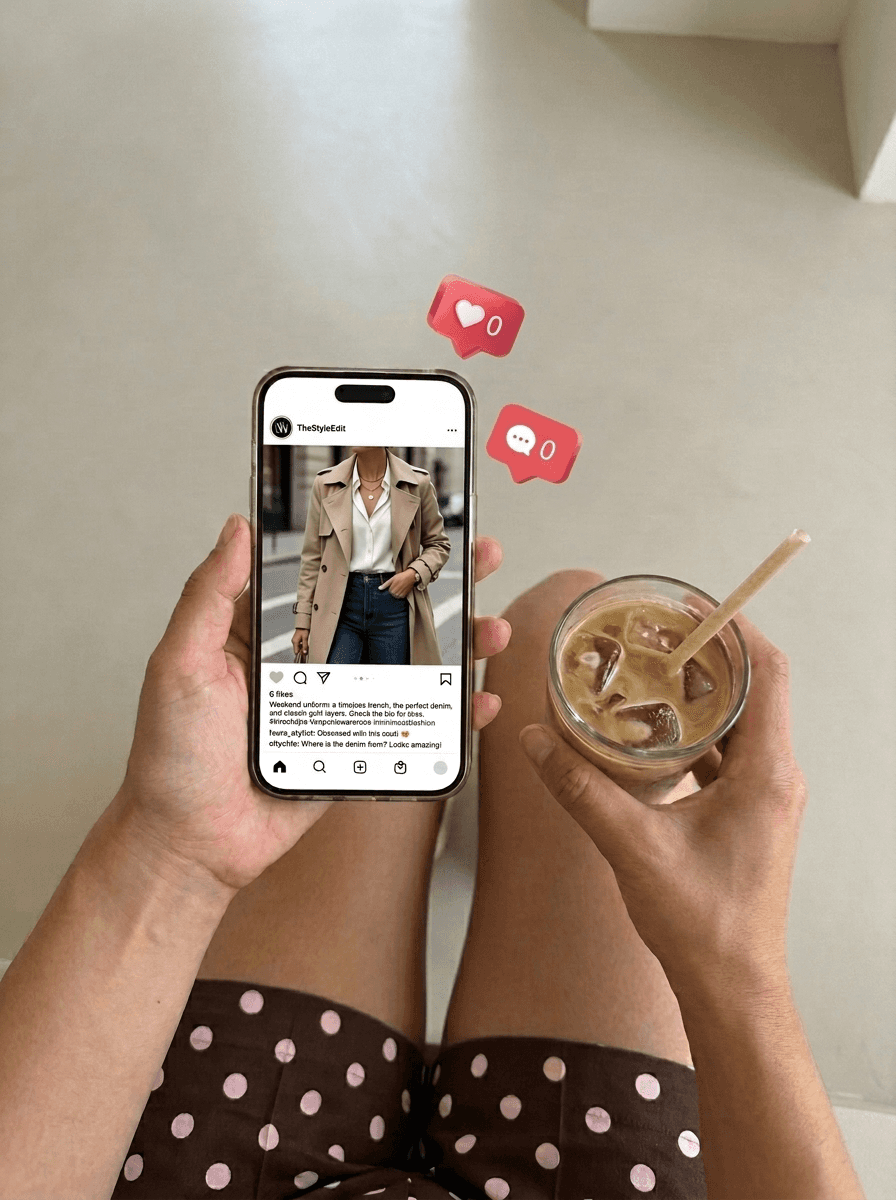
Here's where it gets interesting.
Social commerce - buying directly through social platforms - is one of the fastest-growing ecommerce channels in the world. US social commerce is projected to hit $100 billion in 2026 (Conbersa, 2026).
TikTok Shop alone is forecast to hit $23.4 billion in US sales in 2026 - a 48% increase year-on-year (eMarketer). That's bigger than Target's US ecommerce business.
And 82% of people use social media to discover and research products before buying (SellersCommerce).
Social isn't going anywhere as a discovery channel. It's just that discovery now happens through creator content, social commerce features, and paid - not through your brand's own organic posts.
The brands winning on social in 2026 are doing three things:
Creator content: authentic videos from real people outperform branded posts every time. H&M's head of brand PR said it plainly: "Creator content outperforms branded assets - not by a little, but by a lot" (Marketing Dive, 2026).
Social commerce features: TikTok Shop, Instagram Shopping, and shoppable posts reduce the steps between discovery and purchase. Less friction means more sales.
Paid amplification: take your best-performing organic content and put money behind it. According to HubSpot's 2026 State of Marketing Report, paid social is the #2 ROI channel for B2C brands. Organic social without paid amplification has a ceiling.
For Gen Z buyers specifically, TikTok is now the primary product discovery channel. 43% of Gen Z start their product searches on TikTok - ahead of Google and Amazon (Shopify). If your brand isn't on TikTok with native, creator-style content, you're invisible to that audience.
Search Still Drives More Ecommerce Revenue Than Most Brands Realise

Think about how you shop. You see something on TikTok. You Google it. You read a couple of reviews. Then you buy.
That middle step - Google - is where a lot of ecommerce revenue is won or lost.
Organic search drives 23.6% of all ecommerce orders (Reboot). 68% of US online shoppers search Google before making a purchase (Taylor Scher SEO). And 43% of all ecommerce traffic comes from organic search (Reboot). That's not a side channel. That's a primary revenue source.
SEO also compounds over time in a way paid ads never do. For every $1 spent on SEO, ecommerce brands see an average $22 return. Stop paying for ads and the traffic stops. Good SEO content keeps working for months - sometimes years.
Then there's AI search. This is the new layer most brands are completely ignoring.
When someone asks ChatGPT or Perplexity "best skincare for dry skin" or "most comfortable running shoes," those tools pull from content across the web to build their answer. Around 15 million US adults used AI tools for search in 2024. That's expected to hit 36 million by 2028 (Statista). Brands cited inside a Google AI Overview earn 35% more organic clicks than brands that aren't mentioned.
What does this mean practically?
Write content that answers real questions your customers type into Google. Product guides. How-to articles. Comparison posts. Clear, structured pages that search engines - and AI tools - can actually understand and cite.
The brands that do this well show up everywhere - Google, ChatGPT, Perplexity - without paying for every click. Read more on how AI is changing fashion photography and marketing and what it means for ecommerce content strategy.
Email Marketing Has the Highest ROI of Any Channel - And Most Brands Underuse It
Email is boring to talk about. The results are not.
Email marketing generates an average $36 for every $1 spent - a 3,500% ROI (MailerLite). According to HubSpot's 2026 State of Marketing Report, email is the #1 ROI channel for B2C brands. 44% of marketing professionals say email is their most effective channel - more than any other (Shopify).
The open rate gap tells the story. Email open rates average 43.46% across industries in 2025 (MailerLite). Instagram organic reach is 3.5%. Email reaches roughly 12 times more of your audience per send.
People on your email list chose to hear from you. That's different from hoping your post surfaces in a busy feed.
Automation makes email even more powerful. According to Omnisend's 2026 Ecommerce Report, automated emails are just 2% of total sends but drive 30% of email revenue - earning 16x more per send than regular campaigns.
Three automations every ecommerce brand should have running:
Welcome series - introduce new subscribers to your brand over 3–5 emails
Abandoned cart - recover sales from people who got close but didn't finish
Post-purchase follow-up - drive repeat orders and referrals from happy customers
Set these up once. They run in the background and generate revenue every day.
Pinterest Sends Buying Traffic That Most Ecommerce Brands Ignore

Most brands write Pinterest off. That's a mistake.
Pinterest has 578 million monthly active users as of early 2026. 93% of them use the platform to plan purchases. 88% say they've bought something after seeing it there (Amra & Elma). The #1 reason people use Pinterest is to discover new products and brands.
It also sends traffic to your website - something Instagram rarely does. Pinterest drives 33% more referral traffic to ecommerce sites than Facebook (SocialPilot, 2026). And 96% of top Pinterest searches are unbranded (TechRT) - meaning people search for "minimalist home office setup" or "summer skincare routine," not specific brand names. Your product can show up without anyone knowing who you are.
The shelf life is also completely different from every other platform. A well-optimised Pinterest pin can drive traffic for months or years. A Reel lasts 48 hours.
Despite all of this, only 4% of brands use Pinterest in their organic strategy (Pallyy). The opportunity is wide open.
Treat Pinterest like a visual search engine. Tag products, write descriptive titles, link back to your product pages. Content you create once can keep working long after you've moved on.
Your Product Imagery Is Either Making Sales or Losing Them
Every channel in this article has one thing in common.
They all rely on your product images.
Your images are what people see on Google Shopping. On Pinterest. In your emails. On your product pages. On TikTok and Instagram Shopping. If the imagery is weak, every channel underperforms - no matter how good your strategy is.
90% of the lowest-performing ecommerce websites have UX issues - and poor imagery is one of the biggest (Reboot Online, 2024). A one-second delay in page load time cuts conversions by 7% (Portent). Bad imagery has the same instant-exit effect. And poor product representation is one of the top reasons customers return items.
What good ecommerce product photography looks like in 2026:
On-model images - show products worn or in use. Customers need context, not just a product floating on white. On-model photos consistently outperform flat lays for conversion.
Multiple angles - front, back, detail shots, lifestyle context. The more questions your images answer, the fewer returns you get.
Consistent quality across your catalogue - inconsistent imagery makes even good products look unprofessional.
The cost of producing strong product imagery has dropped significantly. AI-powered ecommerce photography tools now let brands create on-model, studio-quality images without booking a full photoshoot for every product or season. What used to take weeks and cost thousands can now be done in hours. Read more about how AI is changing product photography for ecommerce brands.
Your imagery isn't a creative nice-to-have. It's the single asset that touches every channel you run.
The Brands Winning in 2026 Are Multi-Channel - Not Multi-Platform
There's a difference between being everywhere and being everywhere intentionally.
The brands struggling are the ones posting on five platforms and not converting on any of them. The brands growing have picked the right channels, used them correctly, and built systems that compound over time.
To recap what works in 2026:
Social commerce - creator content, TikTok Shop, Instagram Shopping, paid amplification
Search and SEO - content that answers buying questions and gets cited by Google and AI tools
Email marketing - the highest-ROI retention channel, powered by automation
Pinterest - underused, high purchase intent, drives real referral traffic
Strong product imagery - the foundation everything else is built on
None of this requires an enormous budget. It requires clarity on where your customers are, consistency in showing up there, and the patience to build channels that pay off over time.
The feed will keep changing. Your owned channels won't.
Sources
Outfame - 75 Instagram Growth Statistics 2026 (February 2026)
Metricool - 2026 Instagram Marketing Stats
Addictive Digital - The Decline of Organic Reach on Social Media in 2026
Emplifi - 2026 Social Media Benchmarks Report (via ALM Corp)
eMarketer - FAQ on Social Commerce 2026
SellersCommerce - Social Commerce Statistics 2025
Conbersa - Social Media Strategy for Ecommerce Brands 2026
Shopify - Social Commerce Trends 2026
Marketing Dive - Retailers Look Beyond Social Feeds 2026
HubSpot - 2026 Marketing Statistics and State of Marketing Report
Taylor Scher SEO - 58 Ecommerce SEO Statistics for 2026
Charle Agency - 60+ Ecommerce SEO Statistics 2026
MailerLite - Email Marketing Benchmarks 2025
MailerLite - 42+ Email Marketing Statistics 2025
Omnisend - 2026 Ecommerce Email Marketing Statistics
Shopify - Email Marketing Statistics 2025
SocialPilot - 60 Pinterest Statistics 2026
Amra & Elma - Best Pinterest Marketing Statistics
TechRT - Pinterest Statistics 2026
Reboot Online / Charle Agency - Ecommerce SEO Statistics 2025
Statista - Generative AI Search Adoption 2024–2028 (via SeoProfy)