AI Male Models: How Fashion Brands Use Them in 2026
Kirti Poonia
Short answer: AI male models are computer-generated men, made with the same kind of AI behind Google’s Gemini and ChatGPT Image, that wear and showcase your products in catalog, editorial, and ad imagery without a studio, a casting call, or a photographer. Fashion brands use them to shoot menswear roughly 10x faster and at up to 99.3% lower cost per image than a traditional shoot. Here’s how they work, what they actually cost, and how to keep them looking like your brand instead of AI slop.
Menswear has a production problem. You drop new SKUs every few weeks, each one needs on-model shots for the PDP, the campaign, and three ad formats, and a single studio day with a male model, a photographer, and a stylist still runs into thousands of dollars and two-to-four weeks of lead time. AI male models collapse that timeline. Upload a flatlay on Monday, have 50 on-model catalog shots by Tuesday, run the campaign on Wednesday.
But not all AI male models are equal. The generic ones hand you waxy skin, melted logos, and the same face on every SKU. The good ones look like they walked out of your last lookbook. This guide covers both: what AI male models are, what they cost, where they still fall short, and how brands like H&M, Puma, and Steve Madden use them to ship on-brand menswear at scale.
Key Takeaways
AI male models are AI-generated men that model your products: no studio, no casting, no photographer.
They cut cost per image by up to 99.3% and turn a 2–4 week shoot into a same-day job.
Generic tools produce AI slop (waxy skin, melted logos, the same face on every SKU); fashion-trained and custom-trained models stay on-brand.
Diversity is a setting, not a casting budget: ethnicity, age, and body type are adjustable on demand.
Rights and disclosure matter: own your output, and label it where the EU AI Act or New York law applies.
Quick Comparison: AI Male Models vs. a Traditional Male Model Shoot
Factor | Traditional male model shoot | AI male models |
|---|---|---|
Cost per image | $50–$200+ all-in | ~$1.50, up to 99.3% lower |
Turnaround | 2–4 weeks | Same day |
Model day rate | $500–$2,000+ | $0, no booking |
Diversity & size range | New casting each time | Adjustable on demand |
Revisions | Reshoot required | Unlimited edits |
Best for | Hero campaigns, authentic emotion | Catalog, ads, variants, speed |
What Are AI Male Models?
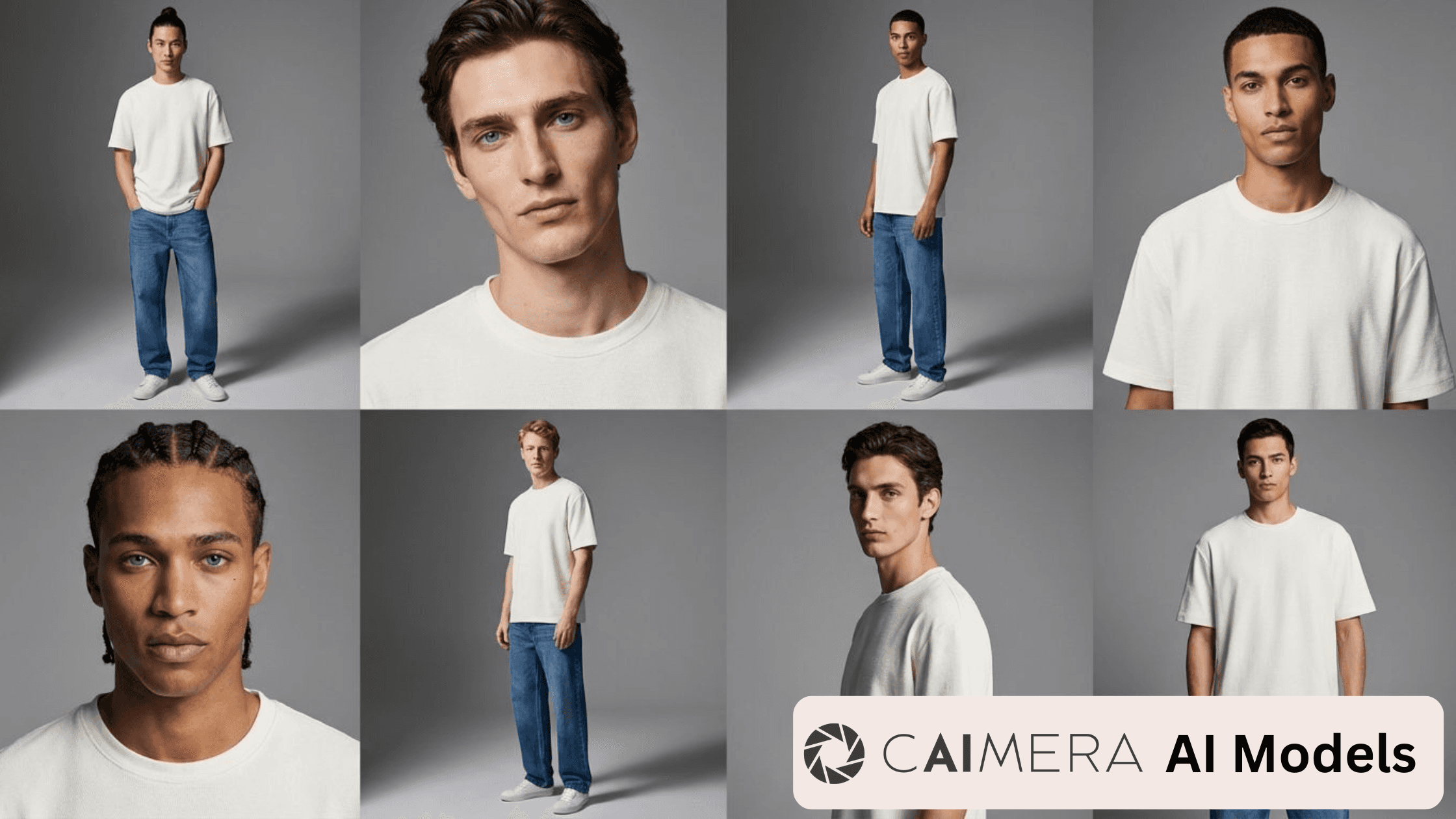
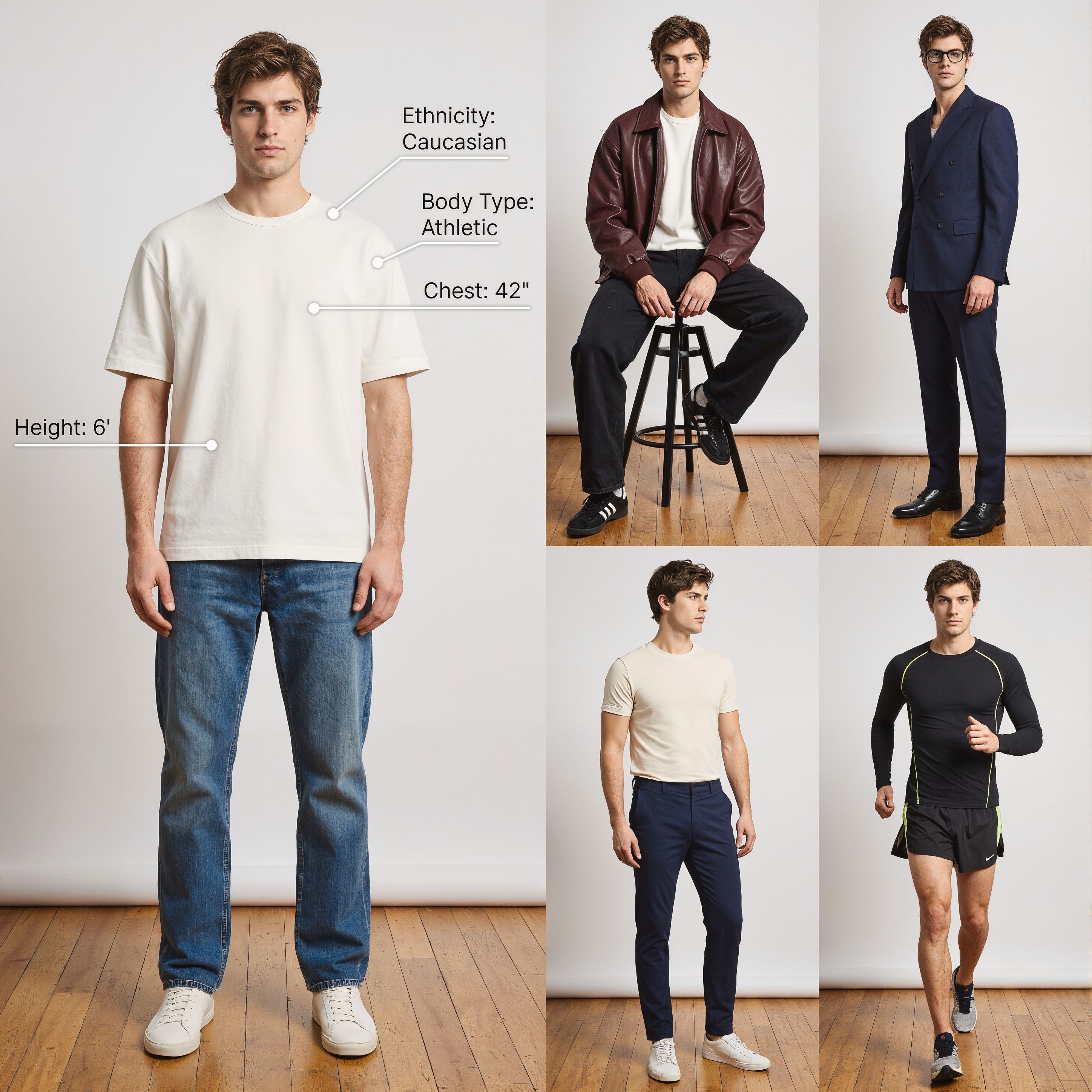
AI male models, also called AI-generated male models, are digital men created with generative AI to display clothing, accessories, and lifestyle products. Instead of booking a person, a brand uploads a product or flatlay and generates on-model images in minutes, controlling face, body type, ethnicity, age, pose, and setting without a photographer, studio, or talent agency.
They sit between two older options. Stock photography is cheap but generic and never wearing your product. A real model shoot is on-brand but slow and expensive. AI male models give you the control of a custom shoot at close to the cost of stock.
How AI Male Models Are Actually Made in 2026
The AI behind today’s male models is a world away from the blurry, uncanny results of a few years ago. The best tools now run on models like Google’s Gemini and ChatGPT Image, which render skin, fabric, and lighting realistically enough that shoppers can’t tell. Skin looks like skin, knitwear looks like knitwear, and a logo stays a logo.
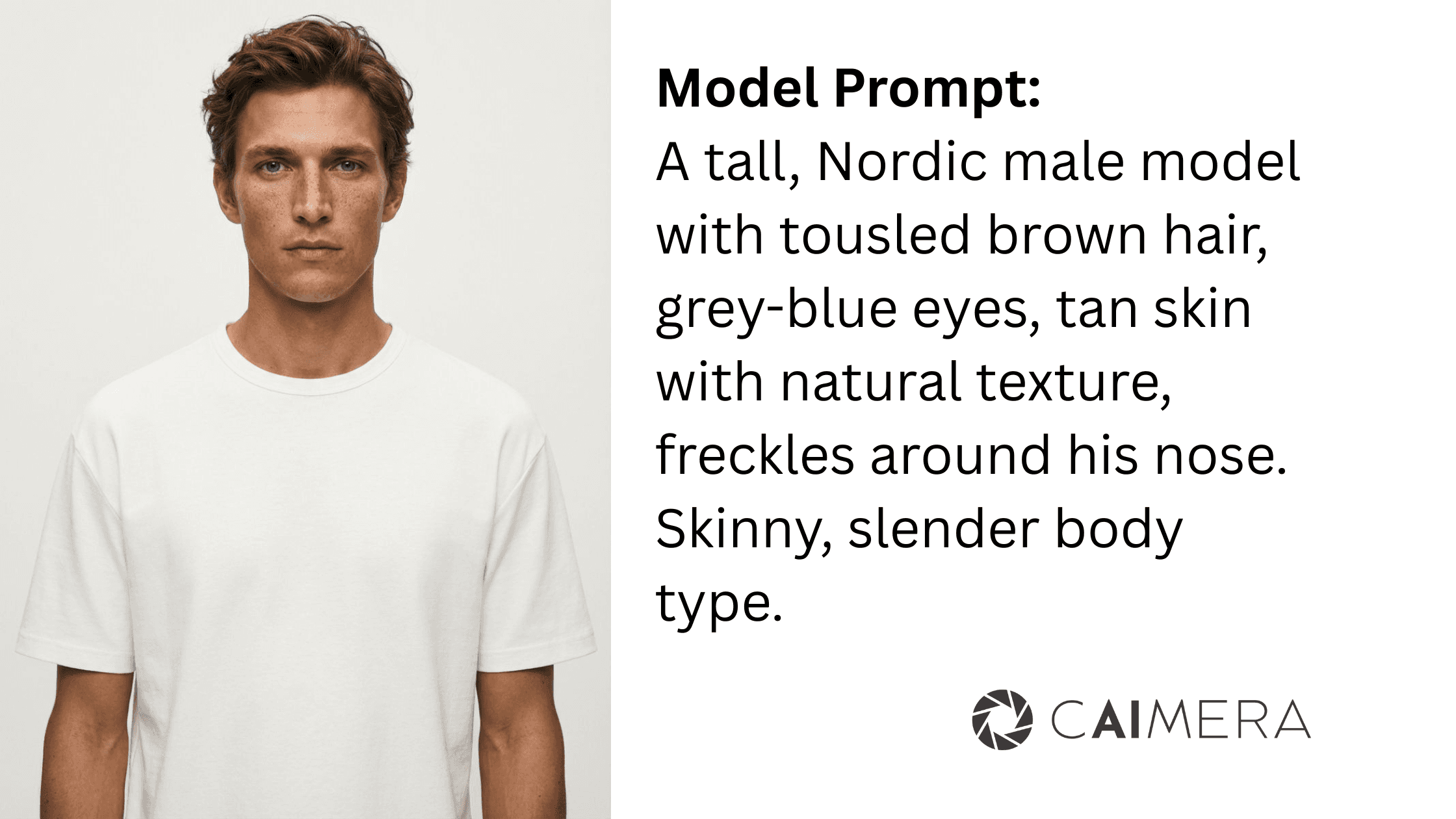
The workflow is the part that matters for brands. A fashion-trained tool doesn’t hand you a blank prompt box. You upload a flatlay or a product photo, pick a male model from a curated AI model library or your own custom-trained one, choose a pose and a setting, and generate. The model wears your actual garment, not a hallucinated approximation of it.
How AI Male Models Differ From Traditional Models
A traditional male model has one face, one body, and a day rate. An AI male model has whatever face and body your brief calls for, costs nothing to “book,” and never has a scheduling conflict.
The bigger difference is iteration. A real model can’t change their height, age, or build between shots. An AI male model can, which means you can test a streetwear line on a leaner frame and a tailoring line on a broader one without two separate castings. And every image holds the same lighting, skin tone, and quality, so your catalog looks like one coherent shoot instead of six different ones.
The Real Cost of AI Male Models vs. a Studio Day
The headline number is the gap. A traditional menswear shoot stacks up fast:
Model fees: $500–$2,000 per day
Photographer: $1,000–$5,000 per session
Studio rental: $200–$800 per day
Crew, styling, and equipment: $500–$1,500
A full day can clear $10,000 once everything is in. AI male models run around $1.50 per image, up to 99.3% lower cost per image, and roughly 10x faster than waiting on a studio calendar. Caimera pricing starts at $15/month, and the first 20 credits are free.
Speed compounds the saving. Generating dozens of on-model shots takes hours, not weeks, so a new drop goes live the same week it lands in the warehouse instead of waiting on a shoot date. Brands shipping on-model AI imagery with Caimera report a 7.3x sales lift and a 50% higher click-through rate on the creative.
There’s a sustainability dividend too. No travel, no lighting rigs running all day, no samples shipped to a location and tossed after one use. For a brand running weekly drops, that’s a real cut to the carbon and waste footprint of content production.
How to Choose an AI Male Model Generator
Most “AI male model generator” round-ups list a dozen tools and call it a day. The choice is simpler than that. Judge any generator on six things:
Fashion-trained, not general AI art. A tool trained on e-commerce and editorial holds garment detail. A generic image model invents it.
Consistency across a catalog. Can it hold the same face and lighting across 50 SKUs, or does every shot drift?
Rights and commercial licensing. You need to own the output for ads and PDPs, not just “generate” it.
Edits without re-paying. Unlimited edits beat burning credits every time the art director wants a tweak.
Video, not just stills. Social needs motion. A still-only tool leaves you stitching Reels by hand.
A path to custom models. When the stock library hits its ceiling, can you train one on your own brand?
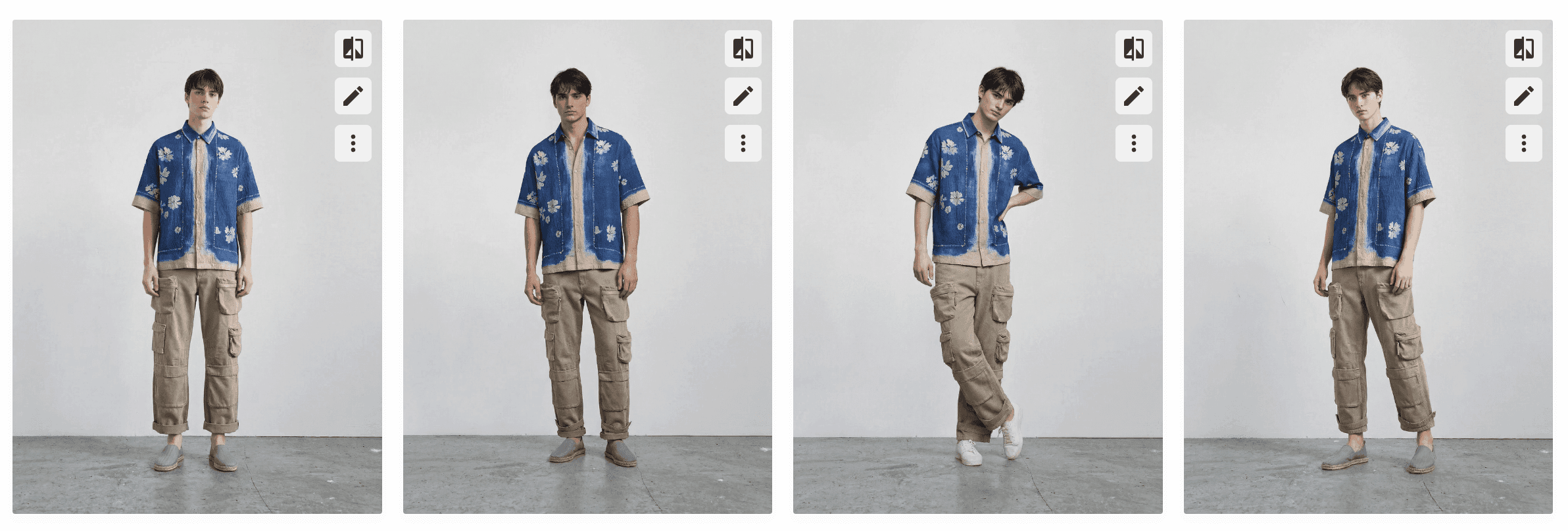
This is where Caimera is built differently from a single-feature generator. Its AI model library covers male models across ages, ethnicities, and body types; Flatlay to Catalog turns one flat into a full on-model set; Fluid generates editorial campaigns; and Enterprise adds custom brand models and digital twins of real talent. If you want a side-by-side of the field first, see our round-up of the best AI fashion model generators.
Diversity and Body Representation Without a Casting Call
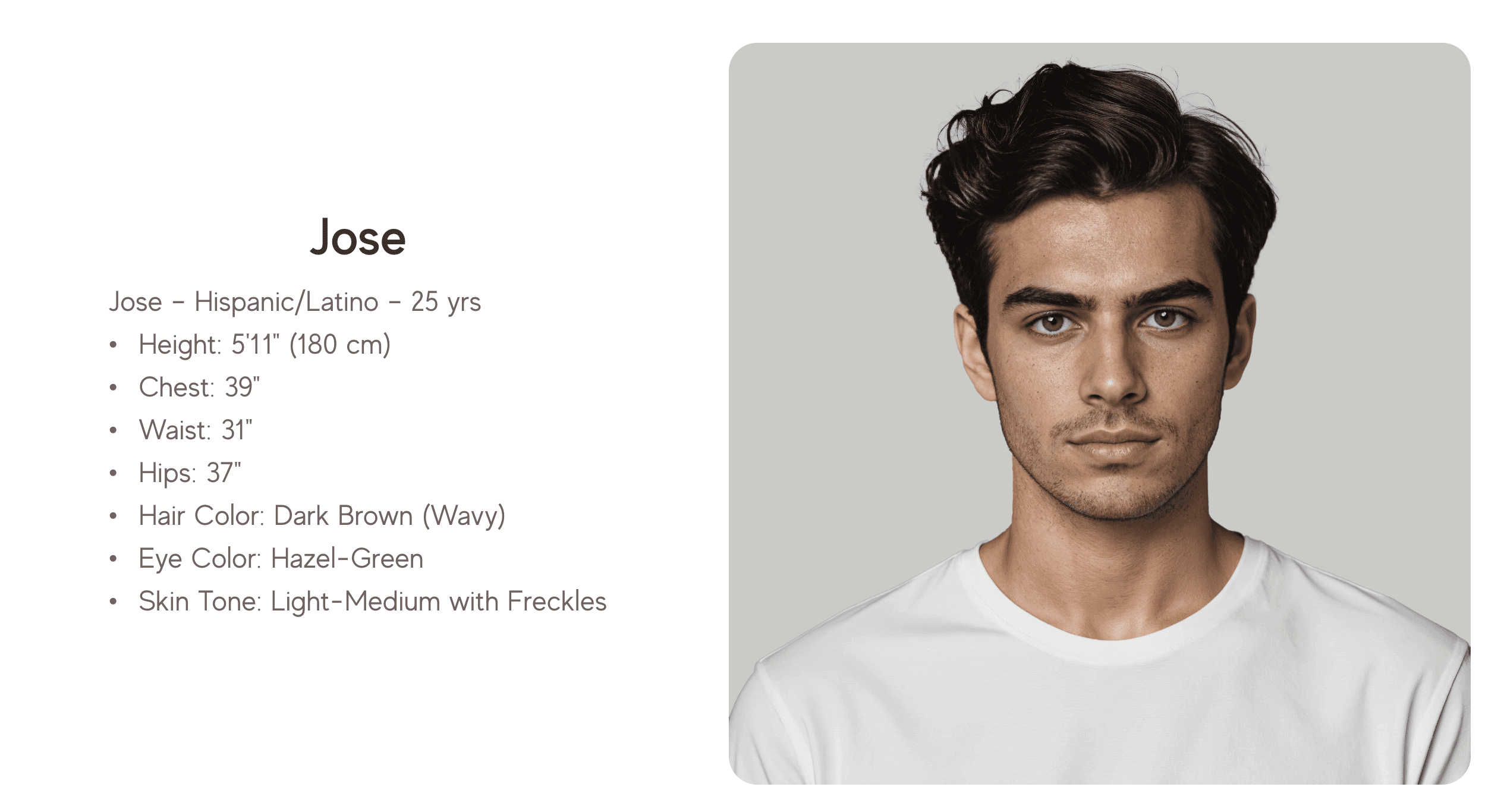
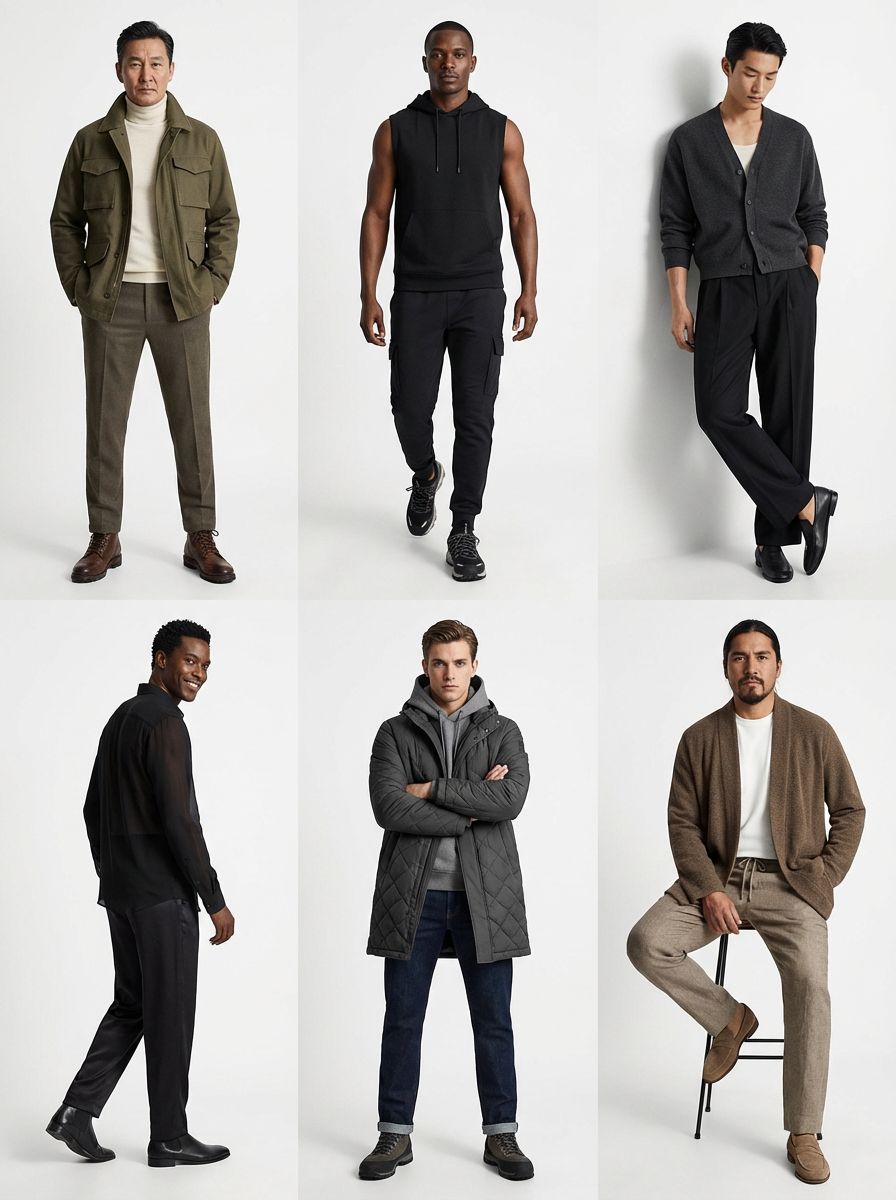
Traditional modeling often defaults to a narrow range of faces and builds because casting wider costs more and takes longer. AI male models flip that. Ethnicity, age, body type, facial hair, and hairstyle are settings, not separate bookings.
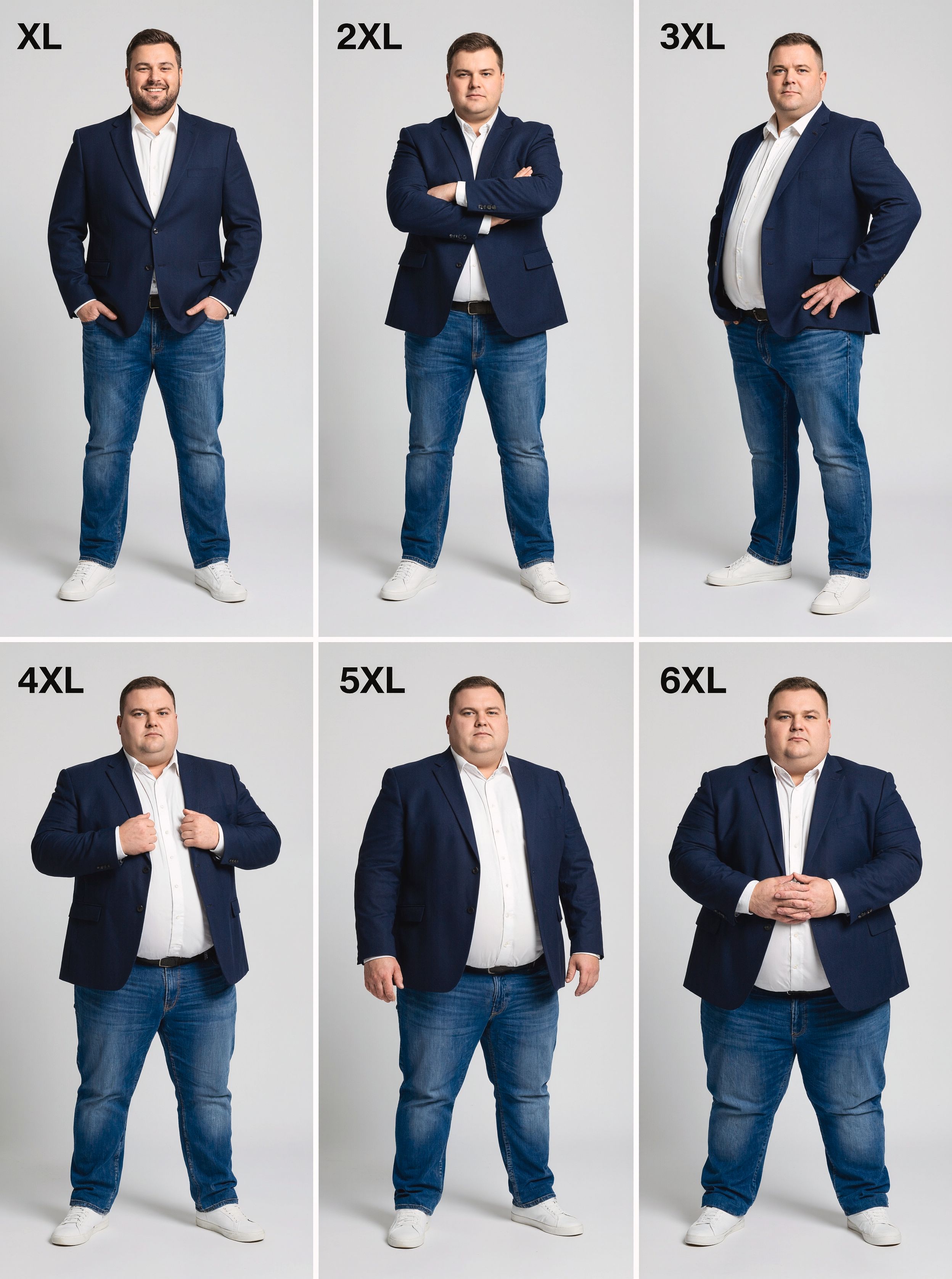
That matters most for the bodies real customers actually have. AI-generated male models can show a garment on lean, athletic, average, and plus-size frames from the same flatlay, so a shopper sees the fit closer to their own. Brands selling XL through 5XL no longer need to book specialist talent for every size run.
The catch is that a shared stock library has a ceiling. If everyone pulls from the same set of AI faces, your menswear starts to look like everyone else’s. The fix is either a fashion-trained library deep enough to stay varied, or a custom-trained model built on your brand’s casting. If you’re writing the prompts yourself, our guide to prompting diverse male models with authentic body representation covers how to get real bodies instead of gym-default avatars.
Representation of Various Ethnicities and Body Types
Inclusion of Plus-Size and Non-Traditional Styles
Plus-size male model generation addresses a major gap in fashion marketing. AI systems create larger body types that traditional modeling often overlooks.
How to Choose an AI Male Model Generator
Most “AI male model generator” round-ups list a dozen tools and call it a day. The choice is simpler than that. Judge any generator on six things:
Fashion-trained, not general AI art. A tool trained on e-commerce and editorial holds garment detail. A generic image model invents it.
Consistency across a catalog. Can it hold the same face and lighting across 50 SKUs, or does every shot drift?
Rights and commercial licensing. You need to own the output for ads and PDPs, not just “generate” it.
Edits without re-paying. Unlimited edits beat burning credits every time the art director wants a tweak.
Video, not just stills. Social needs motion. A still-only tool leaves you stitching Reels by hand.
A path to custom models. When the stock library hits its ceiling, can you train one on your own brand?
This is where Caimera is built differently from a single-feature generator. Its AI model library covers male models across ages, ethnicities, and body types; Flatlay to Catalog turns one flat into a full on-model set; Fluid generates editorial campaigns; VooDoo turns those stills into ready-to-post video; and Enterprise adds custom brand models and digital twins of real talent. If you want a side-by-side of the field first, see our round-up of the best AI fashion model generators.
AI Male Models vs. AI Slop: What Actually Separates Them
Here’s the part most guides skip. Plenty of AI male models look wrong, and your customers can tell. The 2026 tells aren’t extra fingers; current models fixed that. The tells are melted logos, waxy plasticky skin, warped zippers and buttons, jewelry that bends like rubber, fabric that drapes like it weighs nothing, and the same face staring out of every product page.
That slop comes from generic tools running shared base models on generic training data. They were never taught what a real seam, a real knit, or a real brand mark looks like, so they approximate, and the approximation shows.
Fashion-trained models hold the detail because they learned on catalog and editorial imagery. Custom brand models go further: trained on your aesthetic, your product, and your casting, they keep the same male model on-brand across an entire season. That’s why brands like H&M, Bestseller, and Puma run custom models instead of a public generator. On-brand is the default, not a fight. It’s the same reason brand consistency is a workflow decision, not a luck-of-the-prompt one.
Where AI Male Models Still Fall Short
Being honest about the limits is how you use AI male models well. They are not a full replacement for every shoot.
Real models still win on authentic emotion and the kind of candid, lived-in expression a hero campaign trades on. Complex interactions can still read slightly off: hands gripping a bag strap, or a model mid-stride adjusting a cuff. And a brand-new garment with unusual construction sometimes needs a real reference shot before the AI gets the drape right.
The teams getting the most out of this run a hybrid model: AI male models for the catalog, the variants, the ad iterations, and the speed; a real shoot for the one or two hero moments a season that carry the brand story. You’re not replacing taste. You’re freeing your photographer and creative director to spend it where it counts.
Rights, Licensing, and AI Disclosure for AI Male Models
Two questions decide whether AI male models are safe for commercial use: who owns the image, and do you have to label it.
On ownership, read the terms before you commit. Caimera assets are rights-free on paid plans, and Enterprise adds legal indemnification covering AI content used in paid media, the single biggest blocker procurement teams raise. Our legal and ethical guide to AI fashion imagery walks through training-data provenance and commercial-use questions in full.
On disclosure, the rules are arriving. The EU AI Act requires AI-generated content to be identifiable, with transparency obligations taking effect in August 2026, and New York’s own AI disclosure law adds requirements for brands selling there. Neither bans AI male models; they ask you to be clear about them. Build the labeling into your PDP template now and it’s a non-issue later.
For the full breakdown of where and how disclosure applies, see our guide to AI image disclosure laws.
Frequently Asked Questions
How much does it cost to create an AI male model? Around $1.50 per image on a per-credit basis, versus $50–$200+ all-in for a traditional shot. Caimera plans start at $15/month, with 20 free credits to start, so a single subscription replaces several studio days a month.
Are AI male models legal to use in commercial ads? Yes, as long as you own the rights to the output and disclose AI use where the law requires it. Paid Caimera plans are rights-free, and Enterprise adds legal indemnification for AI content used in paid media.
Can AI male models match a specific body type or ethnicity? Yes. Ethnicity, age, build, and size are adjustable settings, not separate castings. You can show the same garment on lean, athletic, average, and plus-size frames from one flatlay.
Do AI male model images need an AI disclosure label? Increasingly, yes. The EU AI Act requires AI-generated content to be identifiable from August 2026, and New York has its own disclosure rules. Add a clear label to your product pages where these apply.
Can I keep the same AI male model across a whole catalog? Yes, with the right tool. A fashion-trained library or a custom-trained brand model holds the same face, body, and lighting across an entire season; that’s what generic generators fail at.
Are AI male models good enough to replace a real model shoot? For catalog, ads, variants, and speed, yes. For hero campaigns built on authentic human emotion, most brands still run a real shoot. The strongest approach is hybrid: AI for volume, real models for the one or two flagship moments a season.
The Bottom Line
AI male models have moved from novelty to production tool. They shoot menswear at up to 99.3% lower cost per image, turn a multi-week shoot into a same-day job, and put diversity and body range on a slider instead of a casting budget. The brands winning with them aren’t chasing the cheapest generic generator; they’re using fashion-trained and custom models that stay on-brand, then saving the real shoot for the moments that earn it.
If you’re shipping menswear on a drop calendar, start there. Try Caimera free with 20 credits and turn a flatlay into a full set of on-model shots, or request a demo if you want a custom brand model or a digital twin of talent you already work with. Either way, your next drop doesn’t have to wait on a studio.
Keep exploring: See our AI fashion model generator and the guide to AI generated models.