Ship a Mother's Day Fashion Campaign in 24 Hours With AI

Kirti Poonia

Mother's Day Campaign for Fashion Brands: How to Ship in a Day With AI (2026)
A Mother's Day campaign for fashion brands can now go from brief to live in 24 hours. Upload a flatlay, generate on-model editorial imagery, stitched social Reels, and PDP-ready catalog shots, then ship across paid, email, and organic, no studio shoot, no model booking, no retoucher's queue. That is what brands like Zalando, Mango, H&M, and Puma are running right now while their competitors are still emailing photographers about July availability.
Here is the load-bearing math. A traditional fashion campaign takes four to six weeks to produce. Mother's Day 2026 is on Sunday, May 10. If you are reading this on the day it published, you have four days. That math has worked against fashion brands for a decade. It does not have to anymore.
The problem isn't ideas. Every fashion brand has an opinion about what would make a great Mother's Day campaign. The problem is the gap between "moodboard approved" and "live on PDP." Brands lose seasonal moments not because the work was bad, but because the timeline was traditional. AI closes that gap from four weeks to four hours, and the brands that already figured it out are quietly compounding while everyone else watches Mother's Day pass.
If you are sitting on a flatlay and a tagline today, you can turn that flatlay into 50 on-model shots by tomorrow morning. The rest of this piece is the playbook for how, including a full 24-hour production timeline, a side-by-side traditional-versus-AI math comparison, and five last-minute Mother's Day campaign plays you can still run before the weekend.
Key Takeaways
US Mother's Day spend is on track for a record $38 billion in 2026, up 11.4% year over year, with apparel cited as a top growth category.
Traditional fashion campaigns take 4 to 6 weeks to produce. AI workflows compress the same pipeline to a single day.
Zalando ships local-moment AI campaigns in 4 days versus 6 to 8 weeks for traditional. Mango quadrupled its social ad revenue with AI-generated creative.
The execution gap, not the idea gap, is why most brands miss seasonal windows. Five concrete plays at the end of this article can still run before May 10.
Brand-grade output requires custom models and rights-clean assets, not a generic prompt box. That is the whole game.
The Real Mother's Day Campaign for Fashion Brands Problem: Execution Time, Not Ideas
Look at any "Mother's Day marketing" listicle on the internet right now. Every one of them tells you the same thing. Run a BOGO. Build a gift guide. Send three emails. Promote a capsule. Partner with a micro-influencer.
None of that is wrong. It is also not the actual problem.
The actual problem is that running any of those ideas well requires creative assets that don't exist yet. A gift guide needs gift photography. A capsule needs on-model imagery in spring tones. A Reel needs video. An email needs a hero. Three weeks ago, your team was supposed to brief a photographer, cast a model, book a studio, and shoot. Most brands did not. Most brands cannot. The drop calendar already moved on.
Marcus runs a 30-SKU DTC brand we'll call Linden. Last year, his team had a great Mother's Day idea: a "her and me" capsule pairing every adult piece with a coordinated children's piece. They mood boarded it in March. They quoted a studio for $18,000. They got the deck approved on April 14. By April 30, the studio was double-booked, the children's casting fell through, and the campaign quietly got pushed to Father's Day, where the children's pairing made less sense. They did not "lose" Mother's Day. They never shipped it. That is the execution gap.
This year, the cost of missing the moment is bigger than ever. US Mother's Day spending is on track to hit a record $38 billion in 2026, an 11.4% year-over-year jump, with shoppers planning a record average spend of $284.25. Apparel is one of the biggest growth categories, and Gen Z plans to spend $922 per shopper, well above every other generation. According to Google Retail's pre-Mother's Day search data, search volume for "mother's day gift" was up 200% month over month in the run-up, and women's handbag searches were up 170% year over year. The buyers are out there. They are searching. They will find the brands that show up with creative that fits the moment.
If you cannot put creative in market by Friday, you will not be one of those brands. Unless you change how the creative gets made.
What "Idea to Campaign in a Day" Actually Looks Like
Here is a real 24-hour timeline for a fashion brand running a Mother's Day capsule campaign with AI as the production layer. Hour by hour, what comes out of the pipeline:
Hour 0, The brief
Three things on a single page. The product (a flatlay of your top SKU and one coordinated children's piece). The tagline ("For the moms who set the trend"). The tier-1 mom persona (35-to-45, urban, lifestyle-led, shops on Instagram). No creative deck. No moodboard reviews with seven stakeholders. One page, 20 minutes.
Hour 2, On-model imagery from the flatlay
Upload the flatlay. Generate 50 on-model catalog shots in parallel across two AI models from your library, three poses each, three backgrounds. The first usable take is back in under ten minutes. By hour two you have approved 12 catalog shots ready for PDP and email. (For the broader category context, see our roundup of AI photography tools that replace expensive photoshoots.)
Hour 4, Editorial hero shots
The catalog cuts feed your PDP. The campaign hero needs scale. Run editorial image generation with a Mother's Day-coded template. Garden golden hour. Mother and child silhouette. Same product, different art direction. You have three editorial heroes by hour four. One of them will run on the homepage.
Hour 6, Stitched social video
Pick five of the strongest stills. Drop them into VooDoo, our prompt-free video agent, and get a stitched, ready-to-post Reel back with AI-directed framing and motion. No prompting, no After Effects, no rendering queue. Repeat for TikTok aspect, repeat for Pinterest. Three platforms, three videos, by hour six.
Hour 8, Email creative, paid ads, organic posts
Resize the catalog shots and the editorial hero into email banners, Meta ad cuts, and Pinterest pins. Brief the copywriter. Drop the creative into your email tool of choice. Schedule organic posts. The full asset kit is staged.
Hour 10, QA, brand approval, scheduling
Brand owner reviews the deck. Approves from email. Shopify sync pushes the catalog shots to PDPs. Klaviyo schedules. Meta queues. The campaign is locked.
Hour 24, Live across PDP, social, paid, and email
Twenty-four hours after the brief, the campaign is in market. Six hours of human work, eighteen hours of generation, review, and scheduling. No studio. No casting. No retoucher backlog. No rendering queue.
Every hour of that timeline is a real workflow that brands like Bestseller and H&M run today. The only thing that changed for them is the production layer.
Mother's Day Campaign for Fashion Brands: Traditional vs AI Timeline
Step | Traditional Mother's Day campaign | AI-driven campaign |
|---|---|---|
Briefing and moodboard | 5–7 days | 30 minutes |
Casting and model booking | 7–10 days | 0 (use brand model library or custom model) |
Studio booking | 5–7 days | 0 |
Shoot day | 1 day | 0 |
Retouching and color | 7–14 days | 0–2 hours |
Channel asset cuts | 3–5 days | 1 hour |
Brand review and approval | 2–3 days | 1 hour |
Total | 30–45 days | 8–24 hours |
This is not a theoretical comparison. Zalando ships its local-moment AI campaigns in four days versus six to eight weeks for traditional ad campaigns. Mango quadrupled the revenue from its social ads after switching to AI-generated creative. Caimera's own customers ship 10x faster than they did with their old studio cadence and pay 99.3% less per image. Brands across the customer base report a 7.3x sales lift and 50% higher CTR on Caimera-generated creative versus their pre-Caimera benchmark. The pattern is the same across vendors and geographies. The brands that compress the production layer are the brands that ship the moment.
If you have not made the switch yet, Mother's Day is the smallest, lowest-risk place to test it. Run one campaign on the new pipeline. Compare what it costs and what it earns against your last one.
Ready to test the difference? Try Caimera free with 20 credits and generate your first Mother's Day asset before lunch. No card, no commitment.

Five Last-Minute Mother's Day Campaign Plays You Can Still Run This Week
Most "Mother's Day creative ideas" articles assume you started in March. These five do not. Pick one. All of them are runnable in under 24 hours from a flatlay you already have, and every one of them is an AI fashion campaign at heart, the production layer is the only thing that changed.
1. The "her and me" capsule
Pair every adult product with a coordinated children's product. Generate the on-model imagery as a pair. Promote it as "matching looks for the moms who set the trend." This is the play Linden missed last year. With a flatlay-to-catalog workflow, both products go on-model in the same generation pass. Pair photography is the hardest thing to coordinate in a traditional shoot and the cheapest thing to coordinate in an AI one.
2. The last-minute gift-card hero
If you are out of stock on hero SKUs, gift cards are the move. Generate a gift-card landing page hero featuring the gift in a Mother's Day-coded scene, in two hours flat. Pair with a "guaranteed by Sunday" delivery promise on digital. Most brands run gift cards as an afterthought. Treated as the hero, they convert.
3. The 30-second story Reel from existing imagery
Take your top five PDP shots. Run them through VooDoo. Get a stitched, ready-to-post Reel back. Caption it "the moms in our customers' DMs this week" and post it. Total effort: 30 minutes. Total budget: less than the price of one stock motion graphic.
4. Localized "mom and me" creative for top markets
Same source flatlay. Different model library per region. The US version uses one model. The UK version uses another. The India version uses a third. Same campaign, four locales, one production pass. This is the play Zalando uses for Oktoberfest in Germany and regional running events. It works for Mother's Day too.
5. The post-Mother's Day "thank you, mom" repurpose
The moment doesn't end on May 10. Plan a post-Mother's Day "thank you, mom" UGC repurpose for May 11 to 13, taking the customer photos that come in over the weekend and stitching them into a final brand video. This extends the campaign window by three days and gets you two more days of attention with no additional production.
Want to see how brands like Bestseller and Steve Madden run these plays in production? See the case studies.
Already know which play you're running? Caimera has ready-made templates for every one of them - pick a template, drop in your product, and generate campaign-ready imagery in under five minutes.
How to Make the Output Actually Look Like Your Brand (Not AI Slop)
This is the part most articles skip. Good seasonal campaigns are not generic AI output with a Mother's Day caption pasted on. They look like your brand. AI slop is the reason most brands have not switched yet. So here is how the brands that already switched solve it.
Use a custom brand model, not stock. Stock model libraries are useful for a Free-tier test. For a campaign, train a model on your own aesthetic, your own past campaign imagery, your own digital twin of a real model. Output stays consistent across SKUs, seasons, and locales. The brands shipping with Caimera train a custom model day one and never look back.
Brief in your art direction, not a generic prompt. Templates beat prompt boxes. Upload your brand book, your last three campaigns, the moodboard you would have given a creative director. The AI is a junior creative who has read everything you sent it. Brief like that.
Approve in your existing review tool. Don't bolt on a new approval workflow because you switched production tools. Brand owners should review and approve from email, the same way they always have. The production change should be invisible to the people approving the work.
Watch for the slop tells. The dead giveaways in 2026 AI imagery are not finger counts. That is solved. The tells now are melted logos, waxy skin, same-face-every-SKU, repeated background props, and editorial scenes where the lighting on the subject and the lighting on the background do not match. Reject any output with those issues. A campaign asset shouldn't ship with them.
Get the rights right. Paid media flips a switch on legal exposure. AI-generated creative for a Mother's Day Meta ad campaign needs to be rights-clean and indemnified. Caimera Enterprise includes legal indemnification on AI content for exactly this scenario. If your AI provider does not, you should not be using their output in paid.
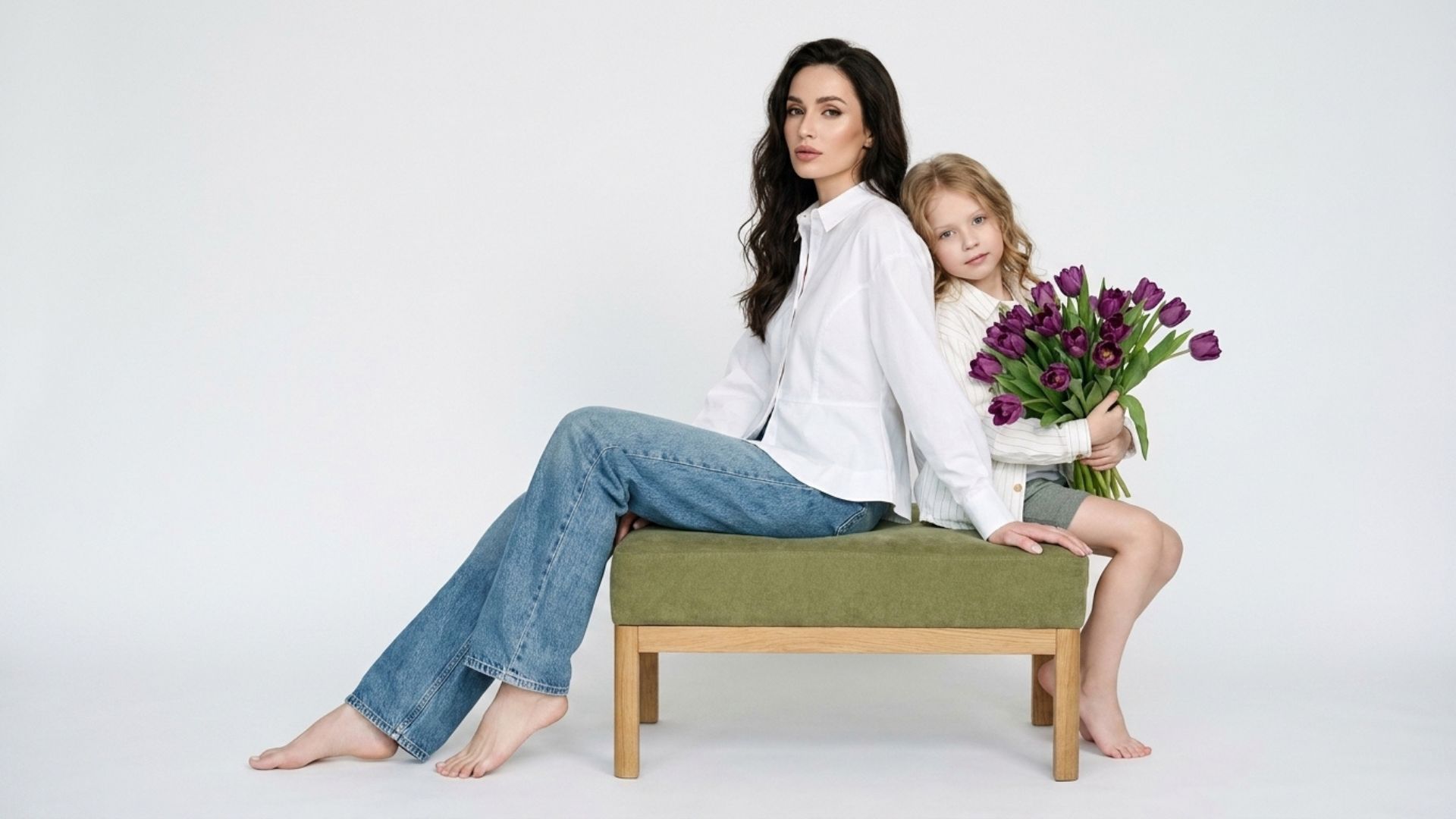
Beyond Mother's Day. The Pipeline, Not the Hack.
Mother's Day is the easiest case for AI seasonal campaigns because the window is so tight. But it is the same playbook for every other seasonal moment.
Father's Day is on June 21. Six weeks out. If you brief a studio today, you'll be done by mid-June if you're lucky. If you brief an AI pipeline today, you'll be done before this article is republished.
Back-to-school is in August. Black Friday is November 28. Christmas is December 25. Valentine's Day is February 14, 2027. Every one of those is a season-shaped execution gap, and every one of them rewards the brands that ship before their competitors.
The brands compounding right now aren't shooting more. They are shipping more. They moved their production layer to AI and reinvested the studio savings into more campaigns, more iterations, more variations to test. That is the real unlock. Mother's Day is just the next moment to use it on.
Frequently Asked Questions
How long does it take to produce a Mother's Day campaign with AI?
A full AI fashion campaign, from brief to live, takes 8 to 24 hours with a modern production pipeline. The same campaign through a traditional studio takes 30 to 45 days. The bulk of the time savings come from removing casting, studio booking, shoot logistics, and retouching. Brand approval and channel scheduling stay the same.
Can I run a last minute Mother's Day campaign three or four days out?
Yes. A last minute Mother's Day campaign run on an AI pipeline ships in a day, leaving 24 to 72 hours of in-market time before the holiday. The five plays in the section above are designed for exactly this window. Pick one, run it, measure it.
Will AI imagery look on-brand for a luxury or premium label?
Yes, if you train a custom model on your aesthetic instead of using stock. Caimera customers including H&M, Puma, Bestseller, Steve Madden, and Superdry ship campaigns this way. The output looks like the brand because the AI was trained on the brand. Generic prompt-box AI tools do not deliver this. Workflow-based tools with custom-model training do.
Is AI-generated imagery legal to use in paid ads?
It depends on the provider. Use a tool that provides rights-clean assets and, ideally, legal indemnification. Caimera Enterprise indemnifies AI content used in paid media. Consumer AI tools generally do not. If your legal team has not approved the provider, do not run their output in paid.
What does this cost compared to a studio shoot?
A typical studio Mother's Day campaign for a DTC brand costs $10,000 to $30,000, with model fees, photographer day rates, studio rental, and retouching. The same campaign with AI costs less than the price of one studio day. Caimera's Pro plan, at $117 per user per month, covers a campaign of this scope with credits to spare.
Can I run this from existing flatlays without re-shooting?
Yes. That is the most common workflow. Upload the flatlay. Generate on-model. The flatlay is already in your DAM. You don't need a new shoot.
What's the workflow for a brand with no in-house creative team?
Caimera Enterprise includes full-service generation and creative consulting for brands that don't run an in-house creative team. The Caimera team operates the production layer. Your team approves the work. For smaller brands, the Mini and Starter plans give a single operator everything needed to run a campaign without a creative director.
You Have Four Days. Here's Where to Start.
A Mother's Day campaign for fashion brands used to be a four-week production project. It does not have to be anymore. Mother's Day 2026 is Sunday. If you are reading this on publish day, you have four days. If you are reading it later, the next seasonal moment is closer than you think.
The brands that win seasonal moments don't have better ideas. They have shorter pipelines. They moved their production layer to AI, kept their brand standards, and now ship a campaign in a day instead of a month.
Pick one of the five plays in this piece. Run it before May 10. Measure it against your last seasonal campaign. If the math works, run the same playbook for Father's Day. Then back-to-school. Then Black Friday. The compounding gets uncomfortable for your competitors fast.
You don't need a bigger creative team. You need a faster one.
Try Caimera free, 20 credits, no card required. Generate your first Mother's Day asset before lunch. Or request a demo if you're shipping enterprise volume across multiple regions.
Sources: NRF Mother's Day Spending Forecast, NRF 2026 Mother's Day Shopping Plans, Business of Fashion, Fashion's New AI Marketing Toolkit.
Last updated: May 6, 2026. Caimera publishes a refreshed version of this piece each seasonal cycle.