Guide to AI Lookbooks: How AI is Revolutionizing Fashion Photography?

Kirti Poonia
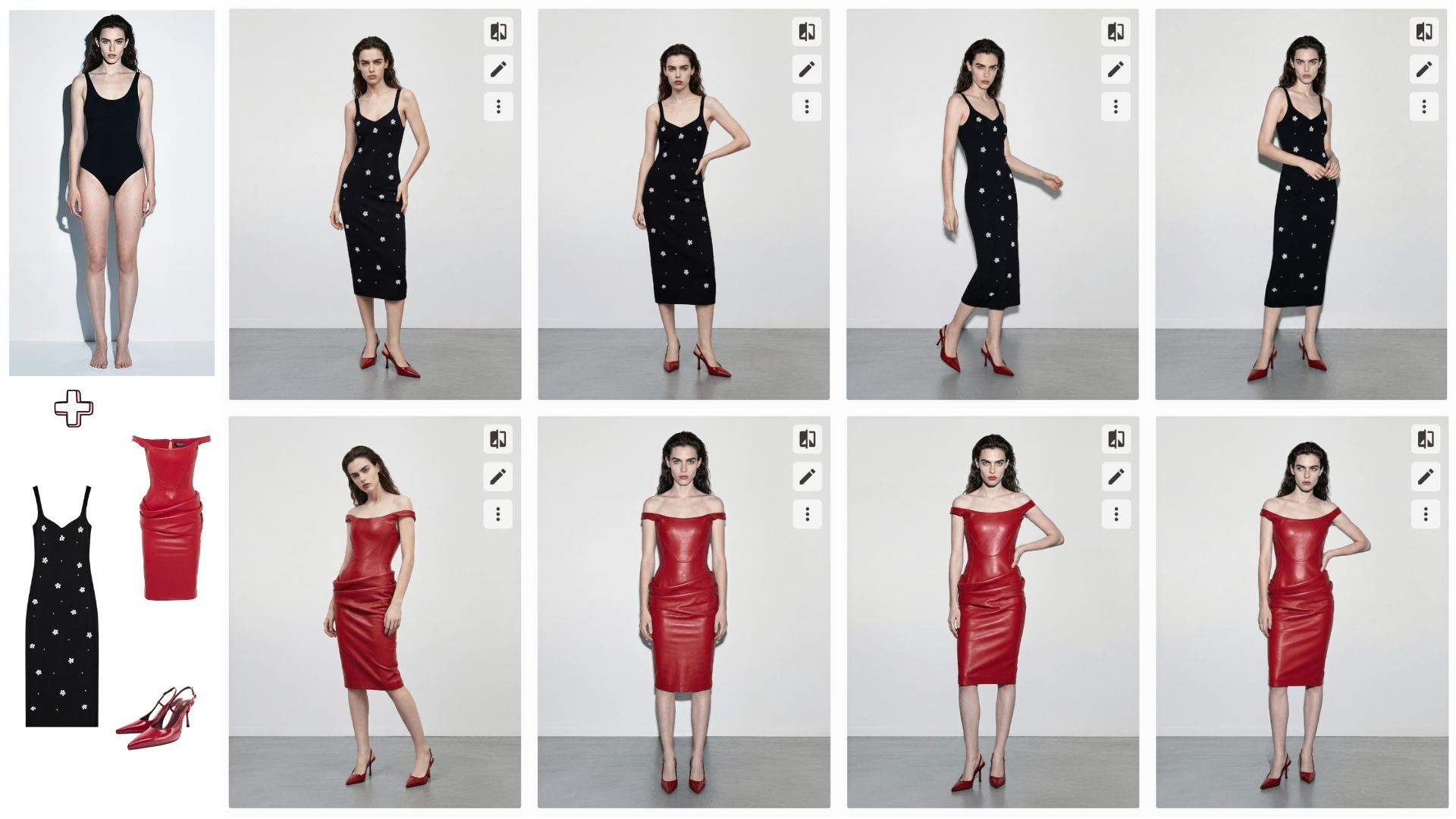
Picture this: a $42,000 invoice for a single photoshoot lands on your desk. Your creative director needs images in two weeks. The photographer you want is booked solid for a month. Your 600+ product catalog has professional photos for maybe 120 items. Everything else sits there as basic flatlay shots converting at half the rate.
This scene plays out every single day in fashion. But 2026 has completely changed the game.
Brands are now creating entire seasonal lookbooks for under $5,000 in 48 hours. They're transforming hundreds of flatlay images into professional on-model shots for about ¼ the price of traditional methods.
And here's the kicker - these AI-generated images are matching, sometimes beating, traditional photography in conversion rates.
The AI fashion photography market hit $2.01 billion this year and experts project it'll reach $6.12 billion by 2029. That's not hype. That's real brands solving real problems with real results.
What AI Changes About Lookbooks
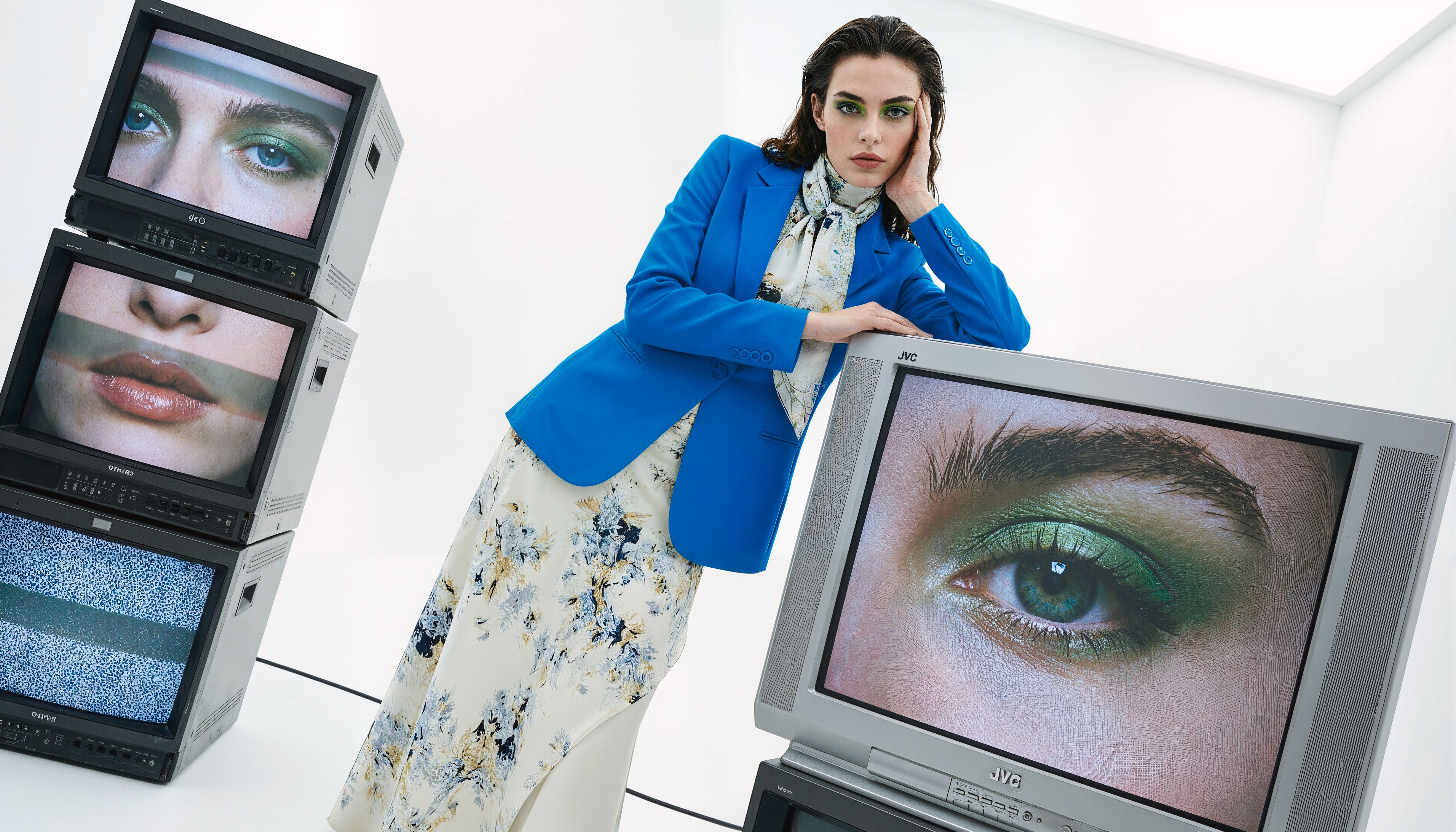
You know the drill: traditional lookbook production runs $25,000 to $50,000 per shoot, takes three to four weeks from planning to delivery, and locks you into whatever you captured on shoot day.
AI fashion photography flips this completely. Upload your product images, select AI models and backgrounds, and get photorealistic results in under 48 hours for a fraction of the cost.
But here's what most brands miss - AI actually serves two distinct use cases:
First, aspirational lookbooks for campaigns and brand storytelling. High-end images for social media, seasonal launches, and advertising where creative vision drives the shot.
Second, catalog transformation at scale. Converting your existing flatlay or hanger shots into professional on-model images. This is where real volume happens for e-commerce.
The smartest brands use AI for both, and knowing when to apply each approach makes all the difference.
How to Create a Lookbook with AI
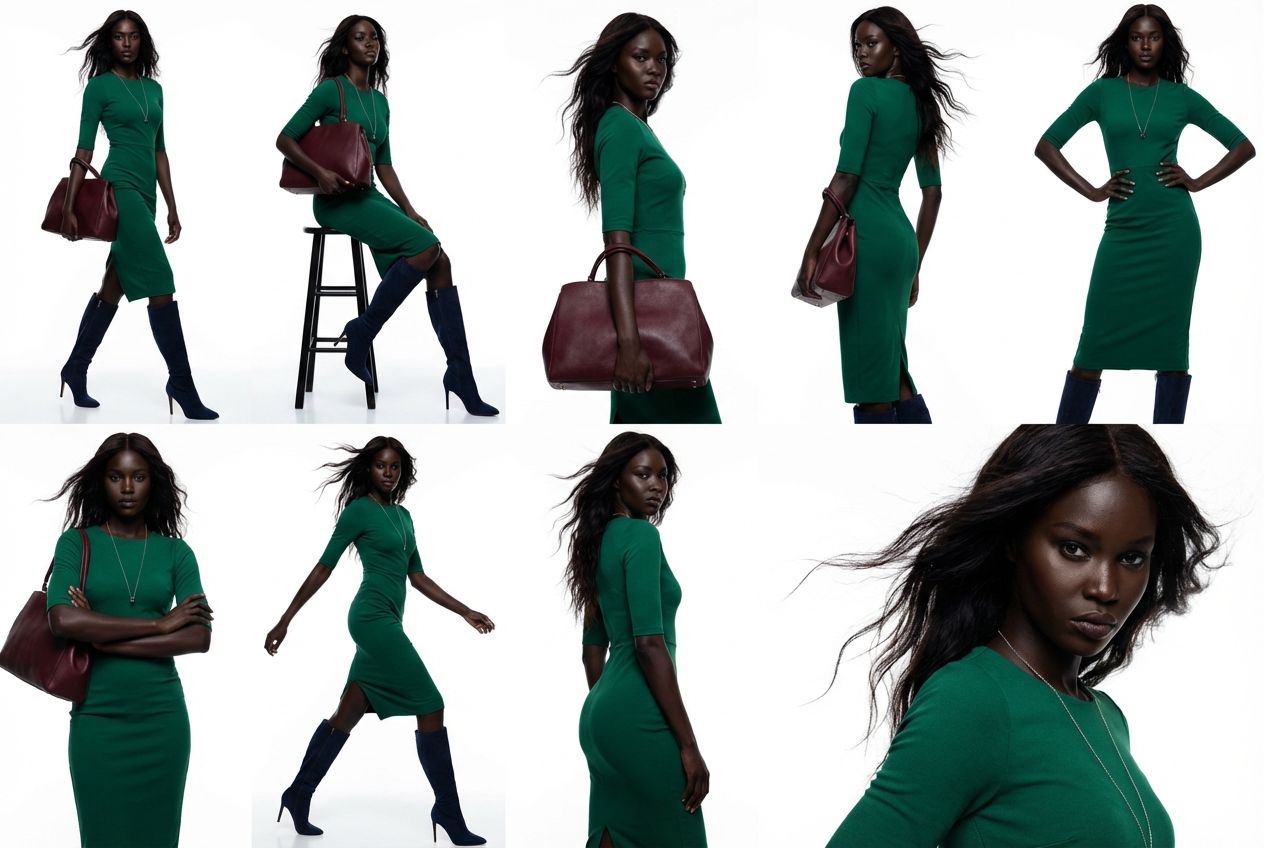
The process is surprisingly straightforward. You start by uploading your product images - flatlay shots, hanger photos, or ghost mannequin images all work. Next, select your AI model by choosing body type (sizes 0 through 28), ethnicity, age, and pose.
Then pick your background - studio white, beach sunset, urban street, whatever fits your brand. Hit generate, and the AI does its thing in about 60 seconds. Review and export your images in whatever sizes you need.
For bulk catalog transformation using flatlay-to-catalog technology, you can upload hundreds of images simultaneously. Set model preferences for your entire collection, let the system process everything in batch, review the results, and export with proper file naming for your e-commerce platform.
The whole process for 500 products takes about two to five days versus 12 to 16 weeks traditionally.
The Real Cost Comparison
Here's how traditional fashion lookbook production breaks down
Cost Item | Traditional Photoshoot | AI Photography |
Model fees | $2,000 - $10,000 | Included |
Photographer | $3,000 - $15,000 | Included |
Studio rental | $1,000 - $5,000 | Included |
Styling & makeup | $1,500 - $3,000 | Included |
Post-production | $2,000 - $5,000 | Included |
Per-image cost | $150 - $500 | $3 - $15 |
100-image collection | $15,000 - $50,000 | $300 - $1,500 |
Timeline | 3 - 4 weeks | 24 - 48 hours |
Cost savings | 85 - 95% |
That's an 85% to 95% cost reduction.
But cost isn't even the biggest advantage. Time is.
Traditional shoots take three to four weeks minimum - one week planning and booking, two to three weeks for shooting and reshoots, and another week for editing and post-production. AI photography delivers finished images in 24 to 48 hours.
That three-week head start means launching collections before competitors, testing concepts before investing in inventory, and responding to trends while they're still hot.
For a brand that means better conversion rates, faster time-to-market, and significantly lower production costs.
The Bulk Catalog Problem Nobody Talks About
Here's where flatlay-to-catalog transformation becomes genuinely revolutionary. You probably have this scenario: 600 products online, budget for professional photography on 150 items, and 450 sitting there as flatlay images. The performance gap is brutal.
The Flatlay vs On-Model Performance Gap (600-Product Catalog)
Metric | All On-Model Photography | All Flatlay Only | Difference |
Conversion rate | 3.80% | 1.90% | -50% |
Return rate | 12% | 28% | 1.33 |
Monthly orders (50K visitors) | 1,900 | 950 | - 950 orders |
Monthly revenue (@$85 AOV) | $161,500 | $80,750 | -$80,750 |
Annual revenue | $1,938,000 | $969,000 | -$969,000 |
Annual lost opportunity | NA | ~$970K | NA |
Photographing those 600 flatlay products traditionally to complete your bulk catalog would cost about $90,000 to $150,000 plus 12 to 16 weeks timeline. Most fashion brands simply accept this catalog conversion gap as a cost of doing business.
But you already have those flatlay images. You already invested in basic product photography. AI flatlay-to-catalog transformation converts your existing flatlay assets into professional on-model catalog images for $1,800 to $4,200 in two to five days. That's a 97% cost reduction and 95% timeline compression for your entire bulk catalog.
This is where AI lookbook technology delivers real ROI - not creating hero campaign content from scratch, but transforming your existing flatlay catalog into high-converting on-model photography at scale.
Real Results: 600-SKU Bulk Catalog Transformation
Metric | Before | After (6 months) | Change |
Products with on-model photos | 80 (converting at 4.2%) | 680 | 7.5 |
Flatlay-only products | 600 (converting at 1.7%) | 0 | -100% |
Average catalog conversion | 2.00% | 3.60% | 0.8 |
Monthly revenue increase | NA | $80,750 | NA |
6-month additional revenue | NA | $485,000 | NA |
Return rate drop | NA | NA | -18% |
Flatlay-to-catalog investment | NA | $3,000 | NA |
ROI | NA | NA | 16067% |
Timeline | NA | 5 days | NA |
This is the real power of AI fashion lookbooks - not replacing your hero campaign content, but transforming your bulk catalog from flatlay to professional on-model photography at scale.
Platform Choices For Creating AI Lookbooks in 2026
Not all AI photography platforms work the same way. Caimera built their platform specifically for fashion e-commerce, handling both lookbook creation and flatlay-to-catalog transformation at scale. They offer true bulk processing with 30-plus AI models across sizes 0 through 28, fashion-specific AI that understands garment construction, manual retouching included, and direct integration with Shopify, WooCommerce, and BigCommerce. Their flatlay-to-catalog solution specifically addresses high-volume catalog transformation challenges.
When choosing a platform, ask yourself what your primary need is. Aspirational lookbooks for marketing work on most major platforms. High-volume catalog transformation needs bulk processing capability. If you need both, look for platforms with dual strength like Caimera. Consider your scale - 50 to 100 products work fine on most platforms, but 500-plus products need true bulk capability for managing massive amounts of content. Prioritize based on whether you need lowest cost, fastest turnaround, highest quality, or best support.
Implementation That Actually Works
Start with a small test. Select 20 to 30 representative products and test both lookbook creation and flatlay-to-catalog transformation. Compare results to your existing photography and show images to actual customers for honest feedback. This costs $200 to $500 and proves the concept with minimal risk.
Once testing shows AI images achieve at least 80% of traditional photo conversion rates, expand to one complete category or campaign. Generate a 50 to 100 image seasonal collection for lookbooks or transform 100 to 200 SKUs for catalog work. This $1,500 to $3,000 investment lets you measure real conversion impacts and work out workflow kinks.
For full implementation, apply AI photography across all seasonal campaigns and complete catalog transformation. This $5,000 to $10,000 investment should deliver 70% reduction in photography costs, 80% reduction in time to market, and positive ROI within the first quarter.
The brands seeing best results use what's called the 80/20 hybrid strategy: 20% traditional photography for hero products and key campaign features where unique creative vision matters, and 80% AI generation for catalog volume, social media content, product variations, and rapid market response. This gives you premium quality where it creates brand impact plus scalability where you need volume and speed.
The Real Concerns
Here's what you're probably wondering. Will AI replace human models and photographers? Not completely.
What's happening is role evolution, not elimination. Major fashion brands now work directly with models and agencies to create digital twins that models own and license. Traditional photography still handles hero campaign content and brand-defining imagery.
AI handles volume catalog work and rapid content needs. New roles are emerging like AI creative directors and virtual stylists who bridge technology and creativity.
Does it look fake? In 2026, most people genuinely cannot tell the difference. That major US retailer mentioned earlier reports AI-generated model images performing in their top three for customer engagement.
Customers click, view, and buy without knowing or caring about the photography method. Quality matters regardless of process.
Should you disclose AI use? Transparency builds trust. Brands openly using AI ethically and communicating clearly see positive responses from customers who value honesty. Context matters though - customers care about accurate product representation for catalog images, but some audiences care more about campaign imagery methods.
Focus on what matters to customers: great products, accurate representation, and good value.
What's Coming Next
AI video lookbooks will be mainstream by 2027. Brands are already generating video content showing models walking and fabric moving. Interactive virtual try-on letting customers upload their own photos and see clothes on themselves in real-time is getting more accurate rapidly. Personalized lookbooks customized to individual customer preferences are emerging. 3D and AR integration combines AI fashion photography with augmented reality for virtual garment viewing.
The trend is clear: AI photography capabilities expand while costs drop. Early adopters are establishing competitive advantages right now. The market is growing at 32% annually through real adoption by real brands seeing real ROI.
Your Next Steps
Start by auditing your current situation. What are you spending on photography annually? What's your typical timeline from concept to published images? What's your catalog conversion rate gap between professionally photographed versus flatlay-only products? What content aren't you creating because of cost or time constraints?
Identify your highest-impact opportunity. If you have 200-plus products without professional photography, focus on catalog transformation. If you need dramatically increased marketing content volume, focus on campaign content. If time-to-market is your biggest pain, focus on product launch acceleration.
Test small with 50 products from one category for catalog transformation or one 20 to 30 image collection for lookbooks. Measure conversion rate changes over 30 days and calculate actual ROI. This $300 to $500 test proves the concept with your actual products and customers.
Choose your platform based on test results. For complete lookbook plus catalog solutions, Caimera offers purpose-built fashion e-commerce tools. Their flatlay-to-catalog transformation specifically addresses high-volume catalog needs at scale.
The brands adopting AI photography in 2026 will have massive advantages over those still debating whether to try it in 2027. Your competitors are already testing this. Some have already implemented it.
The question isn't whether AI fashion photography works - it clearly does. The question is whether you'll adopt it before or after your competitors gain the advantage.
Ready to transform your catalog? Start with Caimera's flatlay-to-catalog solution and turn your existing product photos into a professional catalog in days athttps://www.caimera.ai/flatlay-to-catalog.