Shopify vs WooCommerce vs Wix (2026): Best for New Brands

Prateek Gupte
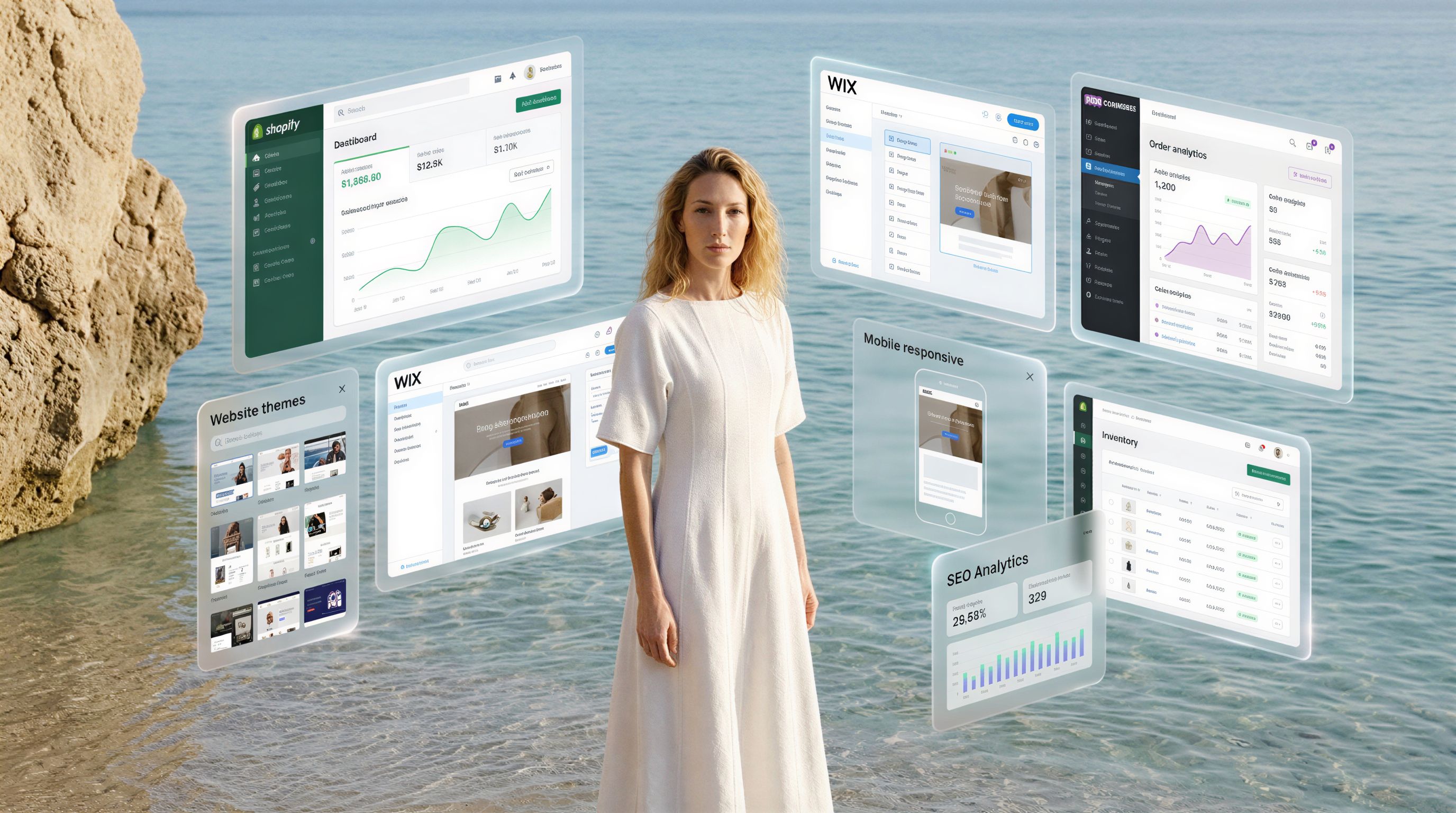
Short answer: Pick Shopify if you're a product-first D2C brand that wants to sell fast across channels. Pick Wix if brand design and content matter as much as the store itself. Pick WooCommerce only if you have a developer on speed dial. Full breakdown below.
You have a product. You have a brand name. You even have a colour palette you spent three weeks agonising over. But the question of “where do I actually build my store?” might be the most haunting question ever. While offline stores are easy to mark based on demand and availability, online stores are equally hard to mark. For most budding brands, the debate comes down to two names: Shopify, the e-commerce-first powerhouse, and WooCommerce, the open-source wildcard that promises full control. And then there is everything in between: platforms like Wix that make a compelling case for brands that want design and commerce in equal measure. The truth, as always, is that the right answer depends entirely on who you are as a brand and where you are going.
This guide cuts through the noise to help budding brands, the kind Caimera works with every day - make a smart, strategic choice. In this article, we will compare all three platforms on pricing, ease of use, AI tools, scalability, and the hidden costs no one talks about upfront.
Key Takeaways
Shopify base plans start at $29/month, but the real monthly cost runs 2–3× that once apps and transaction fees are factored in
Wix Core at $29/month is the cheapest credible option if you ship fewer than 200–300 SKUs and prioritise design
WooCommerce is "free" only if you already have technical resources — total cost of ownership can exceed Shopify
Shopify's third-party payment gateway fee (0.6–2%) is the hidden tax nobody warns founders about
Native AI tooling, ranked: Shopify Magic > Wix ADI > WooCommerce (third-party plugins only)
Quick Comparison: Shopify vs WooCommerce vs Wix
Factor | Shopify | Wix | WooCommerce |
|---|---|---|---|
Starting price | $29/month (Basic) | $29/month (Core) | Free plugin + hosting ($5+/mo) |
Transaction fee (non-native gateway) | 0.6–2% | None beyond processor | None |
Native AI tools | Shopify Magic + Sidekick | Wix ADI, AI Text, AI Image | None (third-party only) |
SKU ceiling before strain | 10,000+ | 200–300 | Unlimited (with right hosting) |
Learning curve | Low | Lowest | High |
Ideal for | Product-first D2C brands | Design-led lifestyle brands | Technical teams, custom builds |
Shopify: The E-Commerce Powerhouse
Shopify is the platform most serious DTC (direct-to-consumer) brands eventually land on, and for good reason. Built specifically for e-commerce, it handles product listings, payments, inventory management, and abandoned cart recovery under one roof. If your primary goal is revenue generation and not just a web presence, Shopify is purpose-built for you.
Pricing (Monthly Billing)
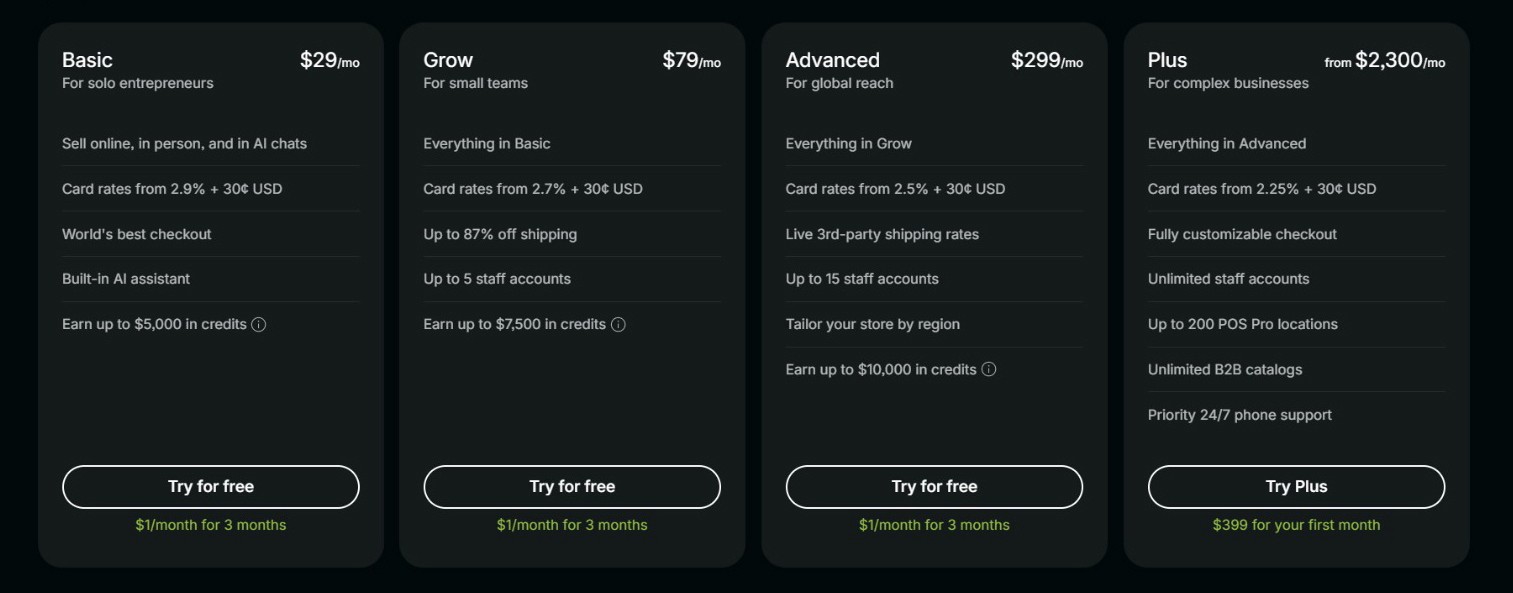
● Basic: $29/month - full store, 2 staff accounts, basic analytics
● Grow: $79/month - professional reports, 5 staff accounts
● Advanced: $299/month - custom reports, third-party calculated shipping
● Plus (Enterprise): from $2,300 /month - for brands doing 1M+ annually
Annual billing saves you 25% across Basic, Grow, and Advanced plans. However, if you are a smaller brand that does not fit into any category, Shopify also has a starter plan for casual selling priced at $5/month.
If you use a third-party payment gateway instead of Shopify Payments, you pay an additional transaction fee — roughly 2% on Basic, 1% on Grow, 0.6% on Advanced. In markets like India, where Shopify Payments is still limited, this adds up quickly.
For up-to-date Shopify pricing, visit shopify.com/in/pricing.
What Makes Shopify Stand Out
Best-in-class app ecosystem with over 8,000 integrations
Shopify Magic: AI tools for writing product descriptions, generating email copy, and creating background-removed product images
Shopify Sidekick: an AI business advisor embedded in your dashboard
Built-in abandoned cart recovery, discount codes, and gift cards
Seamless multichannel selling across Instagram, TikTok, Amazon, and more
PCI DSS Level 1 compliance for payment data security
Shopify's real cost is rarely just the subscription fee. Most brands end up spending significantly on apps, email marketing, loyalty programmes, upselling tools, and reviews - none of which are included by default. A realistic Shopify budget for a growing brand often runs 2–3× the base plan price once apps are factored in.
Shopify also has the most advanced native AI suite. Shopify Magic covers product description generation, email subject line suggestions, FAQ generation, and AI-assisted image editing. Shopify Sidekick acts as an AI business advisor embedded in your dashboard.
Wix: The Design-First Contender
Wix started as an all-round site builder and has grown into a credible e-commerce platform, especially for businesses that value visuals and content as much as selling. Its drag-and-drop builder is arguably the easiest on the internet. Wix is for entrepreneurs who want stunning websites with e-commerce added in — not the other way around.
Pricing (Monthly Billing)
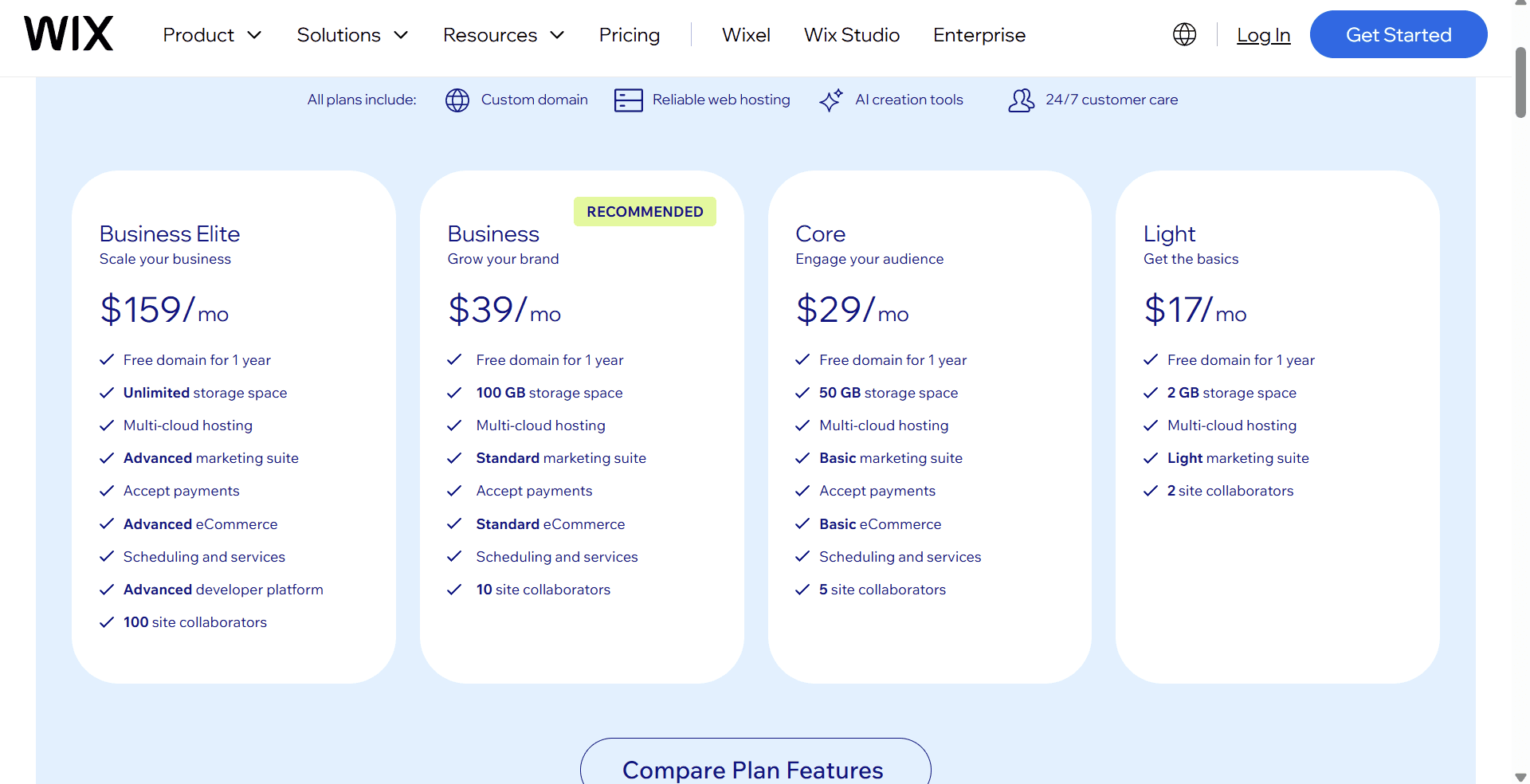
• Light: $17/month - no e-commerce, custom domain, removes Wix branding
• Core: $29/month - e-commerce unlocked, 50GB storage, basic analytics
• Business: $39/month - advanced shipping, product reviews, multi-currency (5 currencies)
• Business Elite: $159/month — unlimited storage, priority support, 100 collaborators
• Enterprise: custom pricing from $500/month.
Monthly billing runs slightly higher across all tiers. Wix charges no additional transaction fees beyond standard payment processor rates. There is also a forever-free plan, but it includes Wix branding, a Wix subdomain, and no e-commerce — useful for testing, not for a serious brand launch. For Wix plan details, visit wix.com/upgrade/website.
What Makes Wix Stand Out
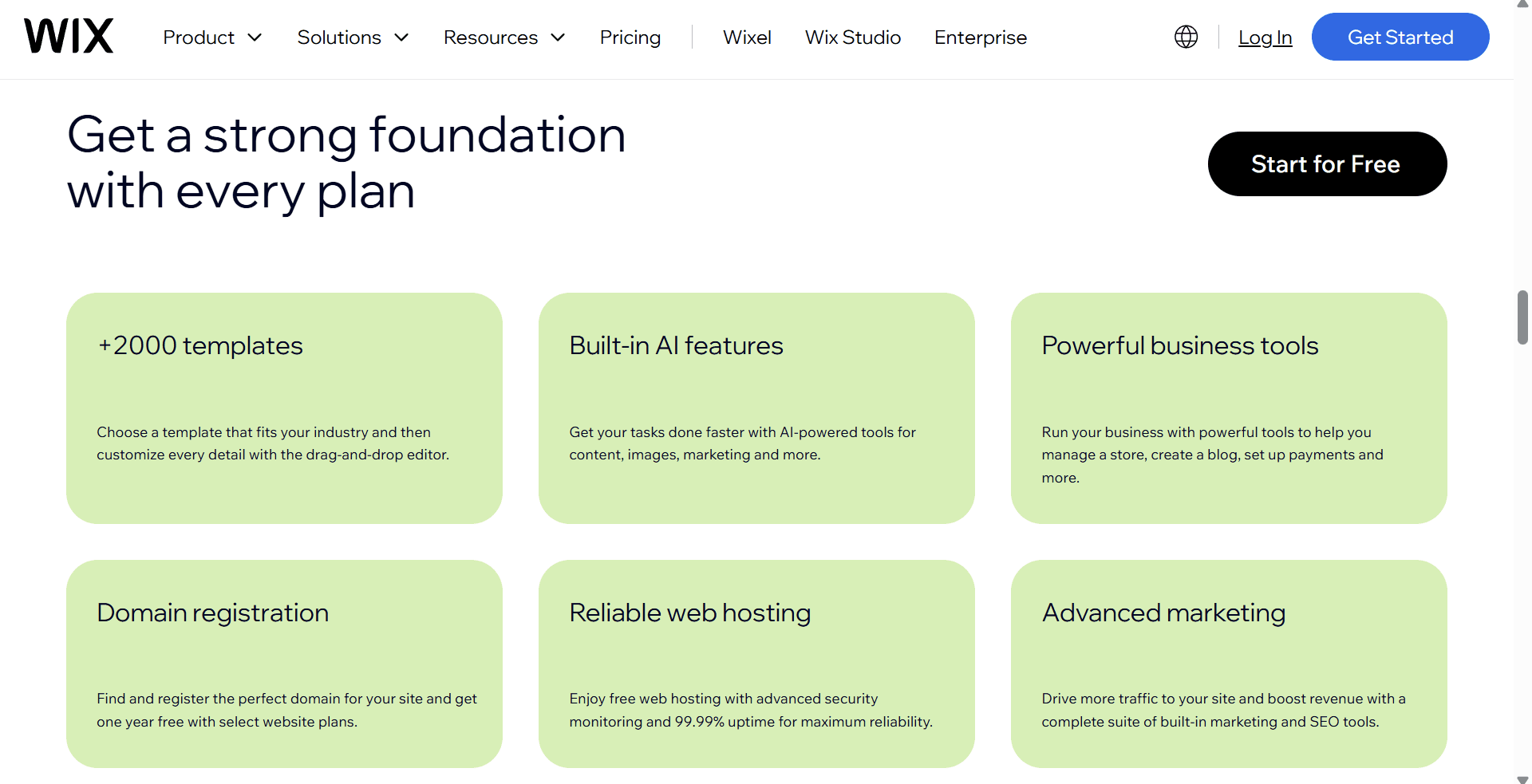
Wix ADI (Artificial Design Intelligence): AI-powered site builder that generates a personalised website from a short questionnaire
Wix AI Text Creator and AI Image tools are embedded across all paid plans in 2026
Hundreds of designer templates with genuine visual range
Wix Bookings, Events, and Restaurants apps make it versatile for service-led brands
14-day money-back guarantee on all premium plans
Wix's e-commerce is adequate but falls behind Shopify as volume increases. Inventory control, complex shipping policies, and multichannel integration are all weaker. Once a business grows past 200–300 SKUs or sells across several platforms simultaneously, outgrowing Wix becomes inevitable.
On AI, Wix has invested heavily in its ADI editor, text generator, and image generator. These tools come standard in every paid plan and are genuinely useful for branding and content work.
WooCommerce: The Open-Source Wild Card
WooCommerce is not a platform in the traditional sense — it is a free plugin that turns any WordPress website into an online store. It powers several million active stores worldwide and holds a significant share of the global e-commerce market (source: Built With eCommerce Usage Statistics). But "free" is where the simplicity ends.
Brands with technical resources (in-house developers or budget to hire them), those who need deep customisation, or businesses already on WordPress find WooCommerce a powerful revenue engine. It is not recommended for founders who want to focus on marketing and product rather than infrastructure.
Pricing (Monthly billing)
WooCommerce itself costs nothing. What you actually pay for depends on hosting, plugins, and developer involvement. Approximate estimates:
Hosting: $7–$40+/month depending on provider and traffic
Domain:$10–$20/year
Theme: $30–$100 one-time
Plugins: $100–$500+/year
Developer (if needed): $20–$200/hour
For WooCommerce hosting options in India, the WooCommerce hosting page is a reliable starting point.
What Makes WooCommerce Stand Out
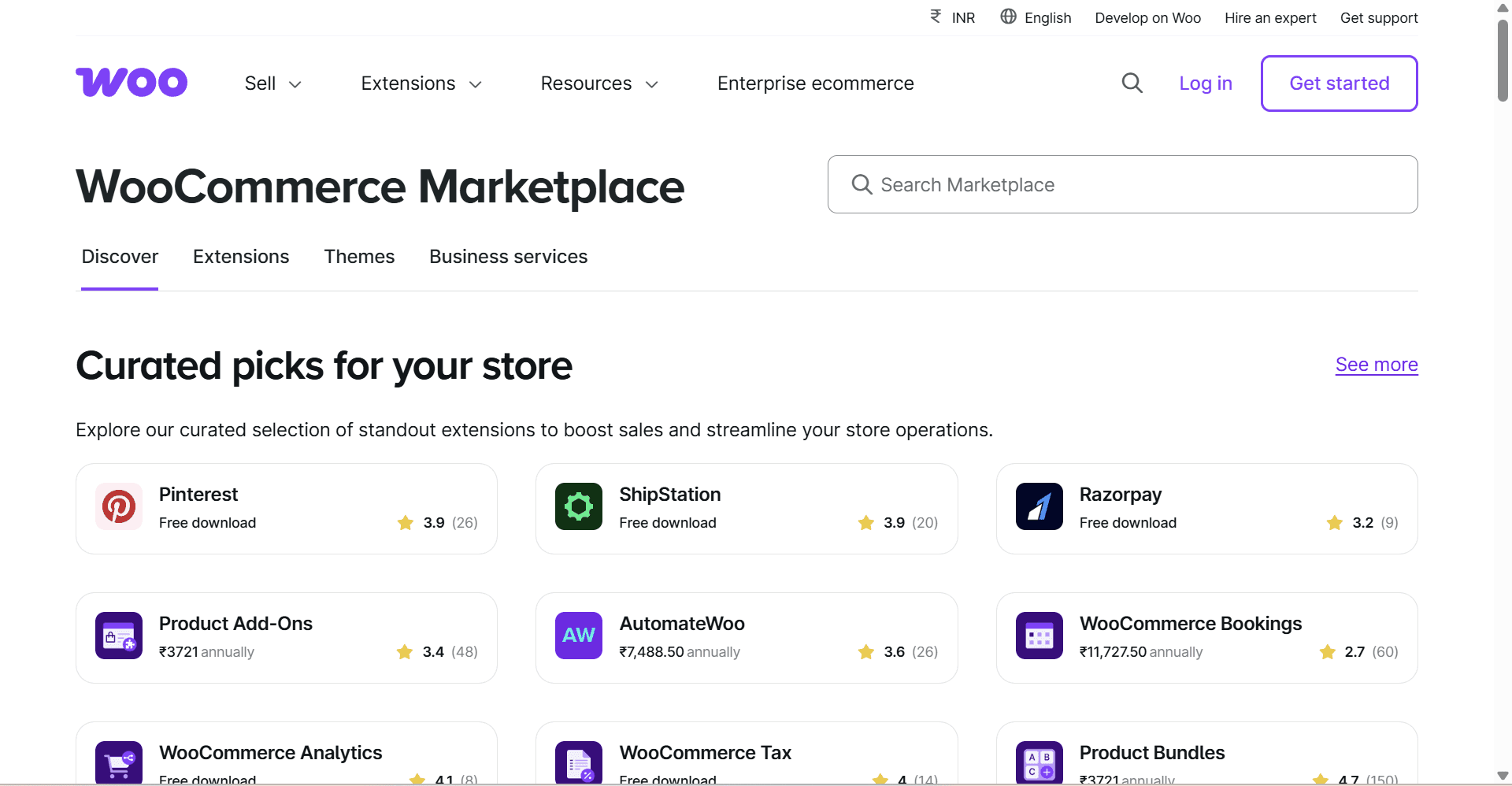
Complete ownership and control — no platform can change its pricing and leave you stranded
Unlimited customisation: if you can code it (or pay someone to), you can build it
No per-transaction platform fees
Massive plugin ecosystem (over 59,000 WordPress plugins)
Ideal for brands with complex product configurations, subscriptions, or membership models
WooCommerce demands ongoing maintenance. Security patches, plugin updates, hosting management, and performance optimisation are your responsibility. A "free" platform can quickly become the most expensive once you factor in developer time, downtime, or a security incident. For founders who want to focus on brand-building, this overhead is often underestimated.
WooCommerce also lacks the native AI tools that Shopify and Wix bake in. You will rely on third-party integrations for AI-driven product descriptions, chatbots, or personalisation.
So, What Should a Budding Brand Actually Choose?
It depends on the goals you have set for your brand:
Choose Shopify if you are building a product-first brand, plan to sell across multiple channels, and want the most robust e-commerce infrastructure from day one. Accept that the real monthly cost will likely be 2–3× the base plan once apps are included.
Choose Wix if your brand identity and content are as important as your store, you have a limited SKU count, and you value design control. It is especially strong for lifestyle brands, creators, and service-led businesses that want a polished web presence with commerce added in.
Choose WooCommerce if you have technical support available, need deep customisation that neither Shopify nor Wix can provide, or are already in the WordPress ecosystem. Do not choose it to save money unless you are genuinely technical — hidden costs accumulate fast.
Still torn between the three? This video walkthrough compares real stores side by side and is a useful watch before you commit:
Why the Platform Is Only Half the Battle
A Shopify store with low-quality stock images converts poorly. The platform is just the canvas — the design does the talking, and for fashion and D2C brands the biggest lever is product imagery. Baymard Institute research shows that product photography quality is among the top drivers of PDP conversion on e-commerce sites, alongside information clarity and trust signals.
This is where most early-stage brands quietly stumble. A $29/month Shopify setup paired with phone-shot flatlays will lose to a $17/month Wix store paired with studio-quality imagery every time.
Caimera AI is a visual AI platform built for fashion and e-commerce brands. It turns plain flatlays into full on-model catalog shots, generates editorial campaign imagery without a studio, and keeps everything on-brand across your drops. A few ways it fits each platform:
On Shopify: Use Flatlay to Catalog to turn a Monday flatlay into a Tuesday-ready PDP set — perfect for brands leaning on Shopify's multichannel reach.
On Wix: Pair Wix's design-first builder with editorial campaigns from Fluid so your hero imagery matches the template polish.
On WooCommerce: Use our AI model library to fill catalog gaps your dev team doesn't have bandwidth to shoot around.
For the full cost-vs-studio argument, see our deep dive on AI photography tools that replace expensive photoshoots in 2026 and the traditional vs. AI fashion photography workflow breakdown. If brand consistency across hundreds of SKUs is your worry, this is how fashion brands keep their AI output on-brand.
So once you've chosen between Shopify, Wix, and WooCommerce, what's next? Start free with 20 credits or talk to our team for a personalised recommendation for your brand.
Frequently Asked Questions
Is WooCommerce really free?
The WooCommerce plugin itself is free, but running a store on it isn't. You pay for hosting ($7–$40+/month), a domain ($10–$20/year), premium themes and plugins ($100–$500+/year combined), and developer time for anything custom. For most non-technical founders, WooCommerce ends up costing more than Shopify's Basic plan over 12 months.
Can I switch from Shopify to WooCommerce later?
Yes, but it is non-trivial. Migrating products, customers, orders, and URL structure from Shopify to WooCommerce requires a dedicated tool (like Cart2Cart) or a developer. The bigger risk is SEO — URL changes without proper 301 redirects can tank organic traffic for weeks. Plan a migration window of 4–8 weeks, not a weekend.
Which platform is best for a fashion brand in India?
For most Indian fashion brands, Shopify's Basic plan is the right starting point — it integrates cleanly with Razorpay and PhonePe, supports COD, and handles multichannel selling to Instagram and Flipkart. Wix works well for boutique lifestyle brands under 200 SKUs. WooCommerce only makes sense if you have an in-house dev team or a long-term agency partner.
Does Wix work for stores with 500+ products?
Technically yes, practically no. Wix Business Elite lifts storage and collaborator limits, but inventory management, bulk editing, and multichannel inventory sync start to strain past 200–300 SKUs. Brands with large catalogs outgrow Wix within 12–18 months and end up migrating to Shopify or WooCommerce.
What is the cheapest way to start a D2C brand in 2026?
Wix Core at $29/month is the lowest credible starting point — you get a custom domain, e-commerce, and AI-powered design tools with no extra transaction fees beyond the payment processor. Shopify Starter at $29/month is cheaper on paper but is built for social-only selling, not a full website. WooCommerce starts even lower if you already host a WordPress site, but only for technically confident founders.
Is Shopify Payments available in India?
As of April 2026, Shopify Payments has limited availability in India, so most Indian merchants use Razorpay, PhonePe, or Cashfree as third-party gateways. This triggers Shopify's additional transaction fee — 2% on Basic, 1% on Grow, 0.6% on Advanced — on top of the gateway's own processing fee. Factor this into your monthly cost before you pick a plan.
About the author: Published by the Caimera content team. Reviewed by founders who have built D2C and fashion brands on all three platforms.
Last updated: 28 April, 2026.