Product Photography Cost in 2026: Real Prices for Apparel

Prateek Gupte
Last updated 4 November 2026.
Product photography costs about $25–$100 per image for simple on-white or flat lay shots and $100–$500+ per product once you add models. Day rates run $1,000–$5,000 for a photographer before you add a model, a stylist and a studio. For a clothing brand that needs on-model, ghost mannequin and detail shots for every SKU, a realistic all-in product photography cost is $75–$90 per approved image with a traditional studio, about $35–$70 if you shoot in-house, and under $12 with an AI-assisted workflow.
Those ranges are wide because most pricing guides price a candle on a white sweep. Apparel is different. A dress needs steaming, styling, a model, a back view and a close-up of the fabric, and every one of those is a line item. This guide builds the budget the way a production lead would: by SKU count, with every cost visible, including the ones that never show up on a photographer’s quote.
You’ll get published rates from real price lists, example budgets for 25, 100 and 500 SKUs, the hidden costs that blow most budgets, and a simple formula for cost per approved image so you can compare quotes fairly.
Key Takeaways
Simple ecommerce shots cost $30–$40 per image from published rate cards (Soona lists $39 per photo; ProductPhoto.com lists $40, dropping to $30 at 51+ photos). On-model work costs several times more.
A one-day on-model apparel shoot in a US city costs about $5,500 once you add a photographer, model, hair and makeup, stylist and studio, and it covers roughly 30 looks.
For a 100-SKU collection with a 4-image set per SKU, expect about $34,650 with a traditional studio, $15,400 in-house, and \$3,170 with AI-assisted on-model images.
Hidden costs (sample shipping, reshoots, minimum day bookings, coordination and approvals) add 10–20% to most traditional budgets.
Compare options on cost per approved image, not price per photo. Rejected shots, reshoots and retouching all count.
How much does product photography cost?
Ecommerce product photography cost depends mostly on the image type. Here’s what brands pay in 2026, based on published rate cards and current pricing guides:
Image type | Typical price | What’s included |
On-white / flat lay | $25–$40 per image | Shoot plus basic cleanup; volume discounts from about 50 images |
Ghost mannequin | $20–$75 per image | Shoot on a mannequin plus the edit that removes it |
Ghost mannequin edit only | \$1.50–\$3 per image | You supply the photos; a retouching service does the composite |
On-model ecommerce | $100–$500+ per product | Model, styling, hair and makeup, photographer, studio, retouching |
Lifestyle / campaign | $1,000–$5,000+ per day | Location, set design, crew, often usage fees |
AI-generated on-model | about \$0.99 per catalog image on Caimera | Generated from your flat lay; you review and approve |
The published numbers behind that table: Soona’s price list charges $39 per photo, a $149 studio fee per booking without a membership, from \$159 an hour for a full-body model, $149 an hour for styling and $299 per model for hair and makeup. ProductPhoto.com charges $40 per on-white photo for 1–10 photos, $35 for 11–50, and $30 for 51 or more.
For on-model work, the unit changes. Studios bill the day, and the day has a fixed number of looks in it. That’s why on-model pricing jumps from tens of dollars to hundreds per product.
What drives product photography pricing
Every quote, however it’s packaged, is built from the same handful of line items. Knowing them lets you spot where a quote is padded and where it’s cutting corners.
The crew and the space
Photographer: $1,000–$5,000+ a day, or $100–$350 an hour with a 2–4 hour minimum.
Model: about $800–$1,500 a day for US ecommerce work, plus roughly a 20% agency fee on top.
Hair and makeup: around $300 per model (Soona lists $299).
Stylist: about $150 an hour. A full day is $1,200 before kit fees.
Studio rental: Peerspace puts the New York average for photo studios at about $78 an hour, and larger spaces closer to $96.

The images themselves
Shot count per SKU. A hard-goods listing might need two images. A clothing PDP usually needs four or more: front, back, a detail and an on-body view.
Complexity. Sheer fabrics, sequins, reflective trims and black-on-black garments take longer to light and retouch.
Retouching. Basic cleanup is cheap, from $0.95 an image on Pixelz’s Professional plan. Skin, fabric and color matching on on-model shots cost more, typically $5–$15 an image.
Usage rights. Web-only use is usually included. Print, out-of-home and paid social can add 10–20% or more to the model fee.
The pattern: the crew is a fixed daily cost, so your real product photography cost per image depends on how many usable looks you get through in a day.
Clothing photography cost: what a full apparel image set needs
Clothing photography costs more than most product categories because a single image rarely answers the shopper’s questions. They want to see fit, drape, the back, and what the fabric actually looks like up close.
A standard apparel set per SKU looks like this:
On-model front for fit and scale.
On-model back for cut and details.
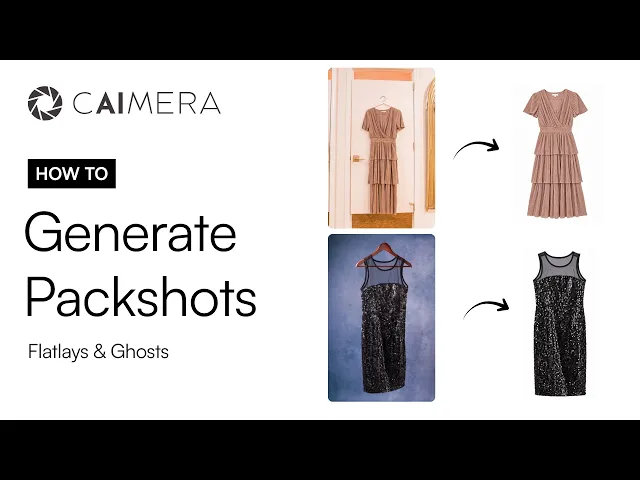
Ghost mannequin front for a clean, consistent grid on category pages.
Detail for fabric, print, trims or hardware.
That’s four images and three different setups: a model set, a mannequin set and a macro setup. Each setup needs its own lighting and its own styling time, and that’s where clothing budgets quietly double. Want to see which mix of these formats your store needs? Our ghost mannequin guide covers when each one earns its place.

Front, back and alternate poses for one garment: the on-model half of a four-image set.
Want to see what that four-image set looks like built from a single flat lay? Try Flatlay to Catalog free →
Product photography cost for 25, 100 and 500 SKUs
Here’s the full product photography cost for a four-image set per SKU, built line by line. The assumptions are listed under the table so you can swap in your own quotes.
Collection size | Traditional studio | DIY in-house | AI-assisted |
25 SKUs (100 images) | $9,025 · $361/SKU · $90/image | $7,116 · $285/SKU · $71/image | \$1,174 · $47/SKU · \$11.74/image |
100 SKUs (400 images) | $34,650 · $346/SKU · $87/image | $15,408 · $154/SKU · $39/image | \$3,171 · \$32/SKU · \$7.93/image |
500 SKUs (2,000 images) | $150,100 · $300/SKU · $75/image | $67,038 · $134/SKU · $34/image | \$13,856 · \$28/SKU · \$6.93/image |

Cost per approved image falls with volume for every method, but a studio stays roughly 8–11x the cost of AI-assisted production.
How we built these numbers
Traditional studio. One on-model day costs about \$5,500: photographer $1,500, model $1,200 including agency fee, hair and makeup $300, stylist $1,200, studio $780 (10 hours at $78) and an assistant or digital tech at $500. A day covers about 30 looks.
Product shots (ghost and detail) are priced at the ProductPhoto.com tiers of $40, $35 and $30. We added $3 a garment for the ghost mannequin composite, $10 per on-model image for retouching, $150 per 100 SKUs for sample shipping, 10% of studio days for reshoots, and $10 per SKU for internal coordination.
DIY in-house. A $2,500 starter kit (camera, two lights, backdrop, steamer and a ghost mannequin form). Your team shoots product images at 30 minutes per SKU and $30 an hour. Ghost composites are outsourced at $1.50.
On-model days use a freelance model for 6 hours at $150 an hour plus a rented studio, about $1,610 a day for 20 looks. We added $5 retouching per on-model image, 15% reshoots and $10 per SKU coordination.
AI-assisted. A $500 kit for clean flat lays and detail shots, shot in-house at the same 30 minutes per SKU. The on-model front, on-model back and ghost mannequin are generated from the flat lay, with 25% extra generations allowed for rejects.
That’s priced at about \$0.99 per catalog image, which is Caimera’s Pro plan billed annually (\$99 per user per month for up to 100 catalog images). We added $1 per image of review time and $5 per SKU coordination.
Two honest caveats on the AI column. Pro billed annually is a yearly commitment, so a 25-SKU brand pays for the year, not the month. And at 500 SKUs you’d need about 19 seat-months of catalog images, so larger teams should spread production across months or talk to us about an Enterprise plan.
What a $25,000 shoot actually buys
Floafers’ CMO David Giordano was spending about $25,000 per campaign on shoots in Miami, and each one produced 25 to 45 usable images. That works out to roughly $550–$1,000 per usable image before anyone opened Photoshop. Once the team moved production to Caimera, Floafers cut content costs by 95% and saw conversions rise 60%. You can read the full Floafers case study for the numbers.
The lesson isn’t that campaign shoots are wasteful. It’s that a quote’s headline price says very little until you divide it by the images you actually publish.
Hidden product photography costs most budgets miss
Photographer quotes cover the photographer, not your full product photography cost. These costs land elsewhere in your P&L, and on a traditional shoot they add 10–20% to the total.
Sample shipping. Insured, tracked round trips for a rack of samples run $100–$300 per batch, more if samples cross borders or need couriers.
Steaming and prep. If the studio doesn’t prep garments, someone on your team spends an hour per 10–15 pieces.
Minimum bookings. A 12-SKU drop still pays for a full model day. Half-days exist, but rates rarely halve.
Reshoots. Wrong colorway, a missed back view, or a model who doesn’t fit the sample size. Budget for about 10% of shoot days.
Color correction. Fabric that photographs a shade off drives returns. Matching every image to a physical swatch is retouching time.
Coordination and approvals. Shot lists, call sheets, feedback rounds and sign-off. It’s internal time, so it never appears on an invoice.
Usage extensions. Using a catalog image in a paid social ad or a print lookbook can trigger extra model fees.
Delay. Booking a crew takes one to three weeks. Every day a SKU sits online without images is a day it isn’t selling.
When IONI Swim founder Alma Jamak priced her first collection, a destination swimwear shoot came to about $18,000. She’s based in Austria, far from any beach.
So she produced every image on the IONI Swim site with Caimera instead, for about $100, and grew sales 15x. The IONI Swim case study walks through what changed. For a launch-stage brand, travel and location fees were most of the bill.
How to calculate cost per approved image
Price per photo is the number on the quote. Cost per approved image is what you actually paid for each image that made it onto a product page:
Cost per approved image = (shoot costs + post-production + hidden costs + internal time) ÷ images approved and published
Work through it with your own numbers:
Add up everything you paid: crew, studio, models, retouching, shipping and reshoots.
Add internal time: hours spent on shot lists, prep, review and approvals × a loaded hourly rate.
Count only approved images. If you shot 600 frames and published 400, divide by 400.
Compare like with like. A $30 on-white photo and a $150 on-model photo do different jobs. Compare within image types, or compare full PDP sets per SKU.
This number also exposes the real cost of AI tools. Count every generation you threw away and every minute your team spent reviewing. In our model above, that’s still under $12 per image, but you should run it on your own catalog. For a deeper look at how AI image pricing works across tools, see our guide to how AI fashion models are priced.
Curious what your own catalog would cost? Compare Caimera plans →
Traditional vs DIY vs AI-assisted: when to use each
Cheaper isn’t automatically better. Each approach has a job it does best.
Book a traditional shoot when the images carry the brand: campaign heroes, lookbooks, billboard work, or a new model face you’ll use all season. You’re paying for creative direction and a team that has done this a hundred times. Our comparison of traditional and AI fashion photography goes deeper on where a real set still wins.
Shoot in-house when you have steady volume, a spare room, and someone on the team with a good eye. In-house works well for flat lays, detail shots and ghost mannequin sources. It gets hard with models, because model days still cost real money and take real coordination.
Use AI-assisted production when you need on-model coverage for every SKU, every colorway and every drop. You shoot clean flat lays in-house, then generate consistent on-model and ghost mannequin images from them. The catch is that accuracy needs a review step. Check every image against the physical sample for color, print placement, logos and hardware before it goes live.
Most growing apparel brands end up with a hybrid: one or two campaign days a season for hero imagery, and AI-assisted catalog production for everything else.
A 100-SKU workflow that keeps costs predictable
Here’s what a 100-SKU drop looks like when the catalog runs on flat lays and AI, and the studio budget is saved for the campaign. Picture a hypothetical resortwear label with 100 SKUs landing in three weeks.
Week 1, Monday–Tuesday: prep and source shots. Steam everything. Shoot each SKU flat on the same backdrop, same light and same camera height, plus one detail. At 30 minutes per SKU, that’s about 50 hours, or two people for three days.
Week 1, Wednesday: lock the template. Choose two or three models, one pose set and one background, and save them. This is what keeps 100 SKUs looking like one collection. (Our glossary entry on SKU consistency explains why this matters for conversion.)
Week 1, Thursday–Friday: generate in batches. Upload flat lays by folder in Flatlay to Catalog, one subfolder per outfit. Generate on-model front and back views, then ghost mannequin versions. After the first shot, later shots with the same model and setup come back in seconds.
Week 2: review against the physical sample. One reviewer checks every image for color, print scale, logo shape, fit and hemline. Rejected images get regenerated or edited, and edits are free on paid plans.
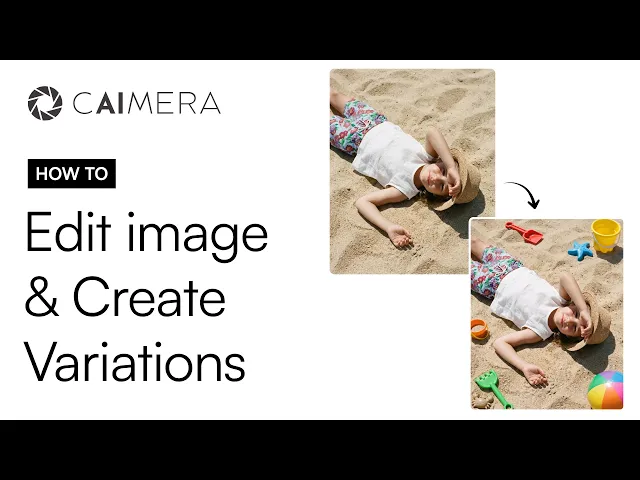
Week 2–3: approve, export, publish. Export at the resolution your store needs, name files by SKU, and push them to your PIM or Shopify.
The total for that drop, by the model above: about \$3,170 and two weeks, against about $34,650 and four studio days for the same 400 images.
Ready to price your next drop? Start free with 20 credits, no card required →
Product photography budget checklist
Before you sign a quote or commit to a workflow, run through this list:
Count SKUs and colorways. Colorways usually need their own on-model images.
Define the image set per SKU (front, back, ghost, detail, lifestyle).
Get quotes that separate crew, studio, model, styling, retouching and usage.
Ask how many looks per day the studio realistically shoots for your category.
Budget 10–15% for reshoots and 5–10% for shipping and prep.
Add internal time for shot lists, review and approvals.
Calculate cost per approved image for every option.
Decide which products deserve a real shoot (heroes, bestsellers, campaign) and which can run AI-assisted.
Plan a color-accuracy check against physical samples before publishing.
FAQ
How much does product photography cost per image?
Simple on-white or flat lay product photography costs about $25–$40 per image from published rate cards, with volume discounts from about 50 images. Ghost mannequin images run $20–$75 per image including the edit. On-model ecommerce images cost $100–$500+ per product once you add the model, styling and studio.
How much does a clothing photoshoot cost?
A one-day on-model clothing shoot in a major US city costs roughly $2,500–$8,000, and about $5,500 is typical once you add a photographer, model with agency fee, hair and makeup, stylist and studio. A day usually covers 25–35 looks, which works out to about $160–$220 per look before retouching.
How much does a 2-hour product photoshoot cost?
At $100–$350 an hour, a 2-hour product shoot costs about $200–$700 for the photographer alone. Many studios set a 2–4 hour minimum. Add a studio fee (Soona charges $149 per booking without a membership), a model if you need one, and editing.
Is AI product photography cheaper than a photoshoot?
Usually, yes, for catalog volume. AI product photography cost is mostly the subscription. On Caimera’s Pro plan billed annually (\$99 per user per month), an on-model catalog image costs about \$0.99, versus $75–$90 per image all-in for a traditional studio. Your team still shoots the flat lays and reviews every output for accuracy, so the real cost per approved image in our model is about $7–$12.
What hidden costs should I budget for in product photography?
Budget for sample shipping, garment prep and steaming, minimum day bookings, reshoots (about 10% of shoot days), color correction, usage extensions for ads or print, and internal time for shot lists and approvals. Together these add 10–20% to most traditional budgets.
Should I still book a real photoshoot if I use AI?
For hero and campaign images, often yes. A real shoot gives you creative direction, a signature model and assets for print and out-of-home. Many apparel brands book one or two campaign days a season and use AI-assisted production for catalog and colorway coverage.
The bottom line on product photography cost
Product photography cost comes down to three numbers: how many images each SKU needs, how many looks you get through per day, and how many images you actually approve. For apparel, the four-image set (on-model front and back, ghost mannequin, detail) is what makes budgets climb. A traditional studio lands around $75–$90 per approved image all-in, in-house around $35–$70, and AI-assisted production under $12.
Start by counting SKUs and colorways, then run the cost-per-approved-image formula on every quote you get. Keep your studio budget for the images that carry your brand, and stop paying day rates for back views of a T-shirt.
See what your catalog would cost. Upload one flat lay and get on-model catalog images in minutes. Try Caimera free, no card required →